
Best IELTS Listening Practice Platforms
How to choose IELTS Listening practice: audio quality, one-play rules, answer review and spelling. Compare Daily English Pro, Cambridge and official sites.
What good Listening practice looks like
Listening is easy to practise badly. If you pause, replay or read the transcript first, you are measuring patience, not exam skill. Strong platforms enforce one play, give you time to transfer answers and show the evidence in the audio afterwards.
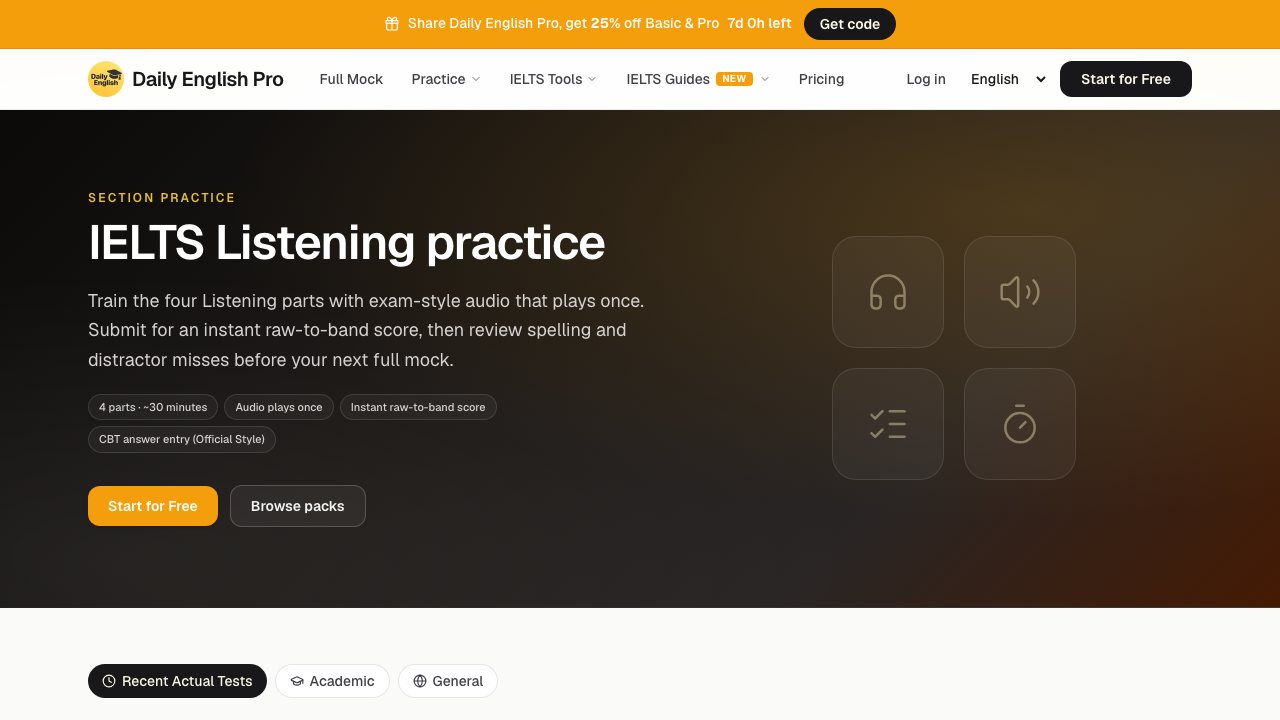
Daily English Pro runs Listening practice with timed sections and answer review, and the full mock tests include a Listening paper in a computer-based layout. We compare it with other common sources below.
- One play only, with realistic section timing
- Clear audio in several accents, since the test uses a mix
- Spelling and format are marked strictly, as in the real exam
- Review shows where the answer appeared and why distractors fail
- Question variety: form completion, multiple choice, matching, maps and more
Platforms compared for Listening
| Source | Best for | Limit |
|---|---|---|
| Daily English Pro Listening | Timed section drills and CBT-style mocks | Not an official paper |
| Cambridge English IELTS | Authentic-style audio and tests via books | Manual timing and marking |
| British Council | Official format notes and sample questions | Limited full-length audio |
| IELTS Liz | Strategy for each question type | Mostly lessons, not a timed simulator |
Daily English Pro: section drills and mocks
Use the section pages for question-type work. Spend a week on form and note completion, then maps, then multiple choice. Our guides on form and note completion and distractors and spelling match the usual error patterns.
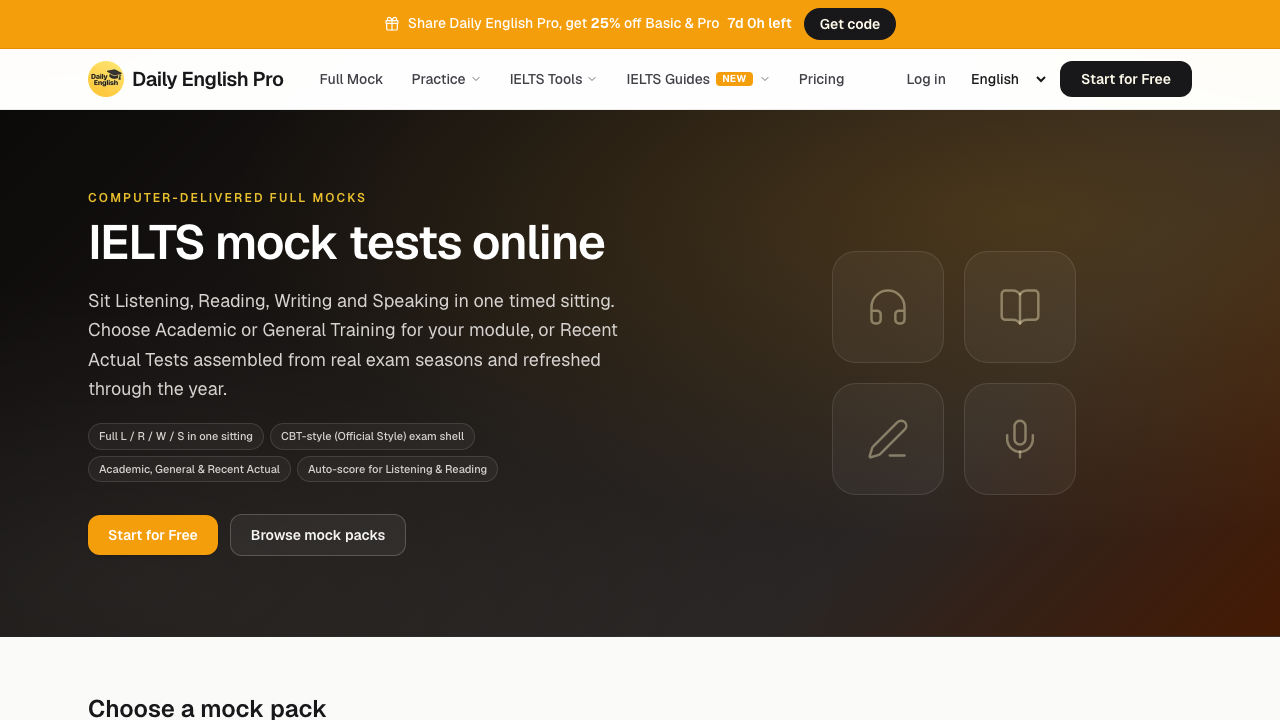
When you sit a full mock test, treat Listening as a pacing test. Practise writing answers while the next question is already playing, and use the transfer time to check spelling.
Books, official pages and tip sites
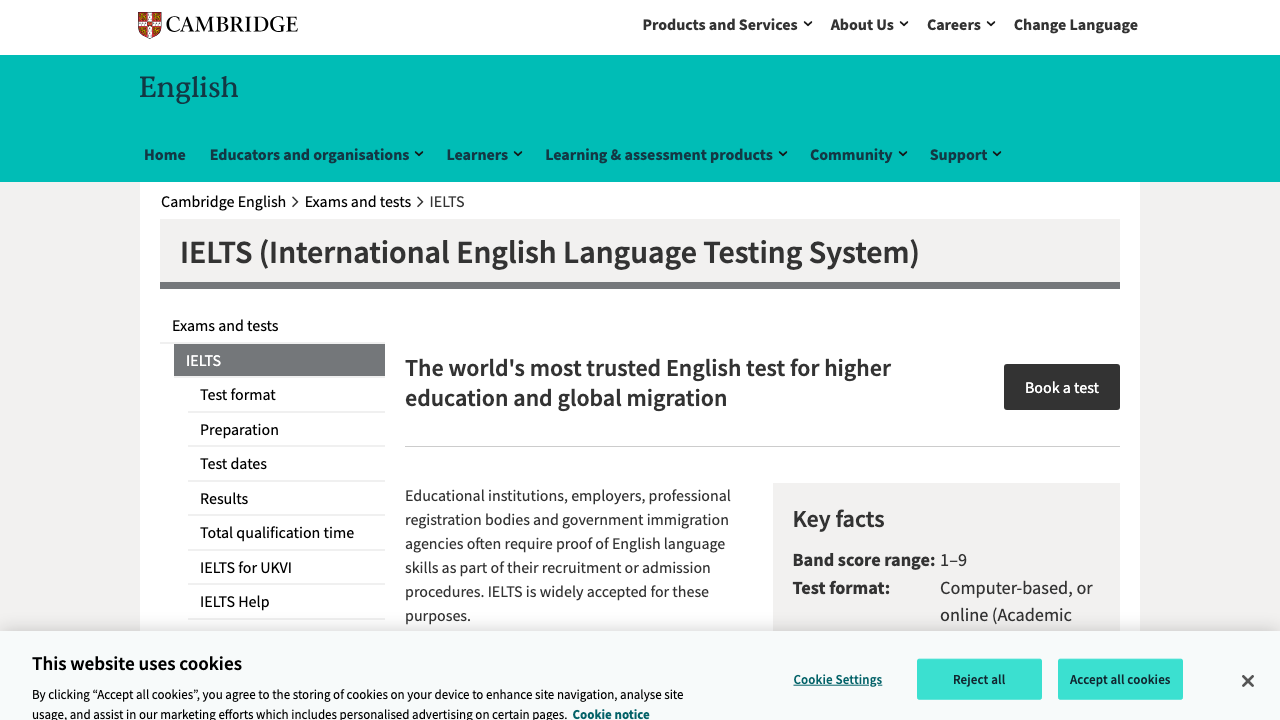
Cambridge-linked practice books are a reliable source of authentic-style audio. Start at the Cambridge English IELTS page and use a stopwatch yourself, since books will not enforce timing.
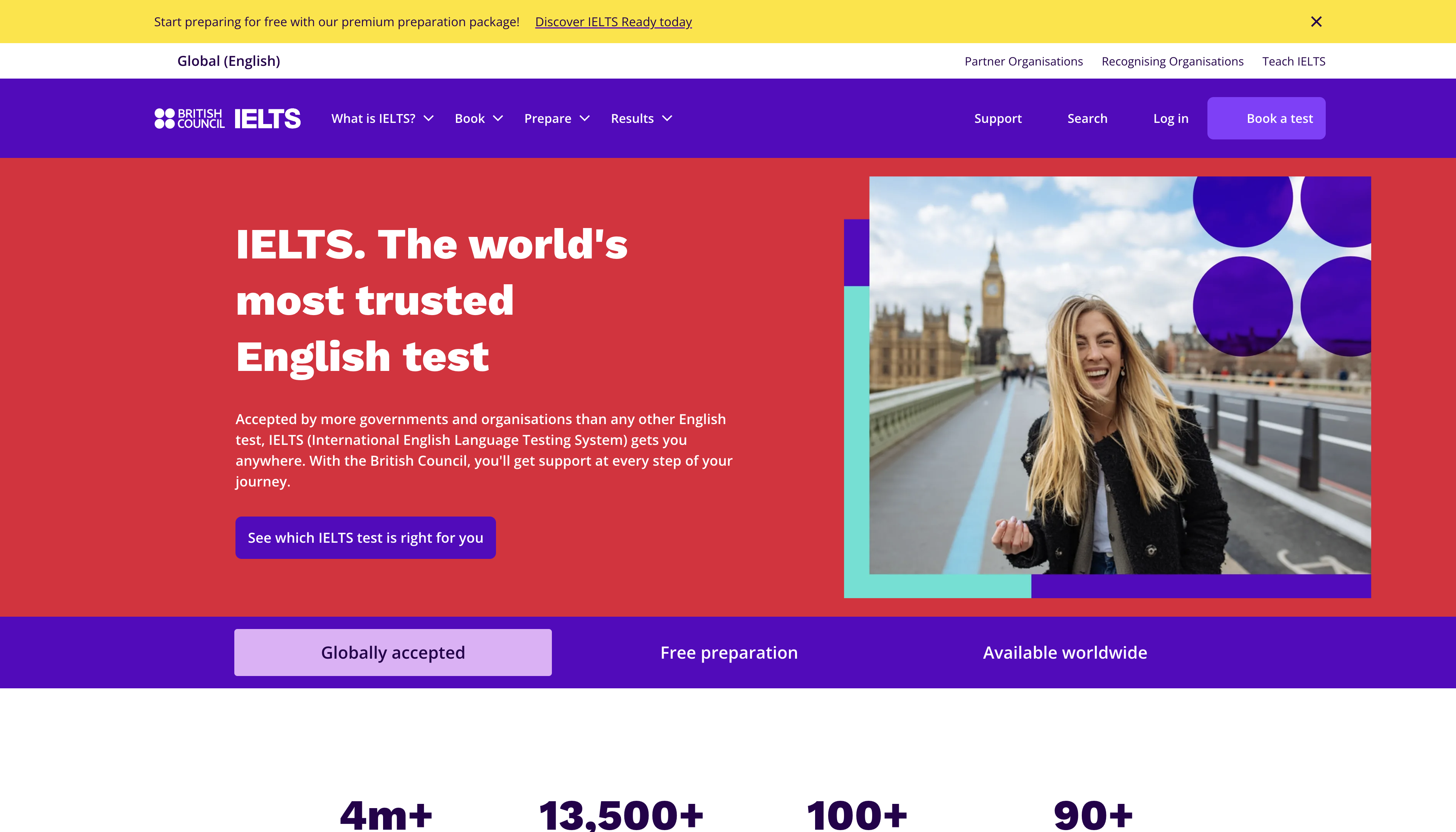
British Council Take IELTS offers official preparation pages and sample question types. Use them to confirm format, then move to a platform with more volume.
IELTS Liz has strong lessons on question types and common traps. Read a lesson, then test the method on timed audio.
A two-week Listening plan
- 1Days 1 to 2: diagnoseTake one full Listening paper in practice. Mark the section and question type where you lose most marks.
- 2Days 3 to 7: one type per dayDrill form completion, maps, multiple choice and matching. Review every miss with the audio location.
- 3Days 8 to 10: spelling and pluralsRe-do missed items without the key. Keep a list of repeated spelling errors.
- 4Days 11 to 14: full timed paperSit a mock in one block. Compare with day 1.
For wider input, the useful IELTS resources hub lists authentic listening sources outside exam practice.
Criteria checklist before you commit
Use this checklist when you compare free samples or paid Listening packs. Score each source out of five. Keep only the tools that hit at least four.
- One-play mode you cannot casually override while scoring
- Section timers that match exam pressure, including transfer time where relevant
- Accent mix beyond a single regional voice
- Strict spelling and number format marking
- Review that shows the audio evidence, not only a green tick
- Enough question types that you do not only practise form completion
Mistakes that waste Listening practice
- Pausing mid-section and calling the result a mock score
- Reading the transcript before the first play
- Ignoring plural and singular errors because the idea was right
- Only practising easy Section 1 conversations
- Collecting papers without an error log by cause
- Switching platforms every week so you never finish a review habit
Fix the process before you buy more content. A short error log with causes (missed cue, spelling, distractor, paraphrase) usually lifts scores faster than a new subscription.
How to combine sources with Daily English Pro
A simple stack works well: learn method on a tip site or our Listening guides, drill under time in Listening practice, and measure progress with a full mock test every week or two. Keep Cambridge-style books for authenticity checks when you want a paper that feels closest to published exams.
- 1Method dayRead one question-type guide, such as form and note completion.
- 2Timed drill dayComplete one or two sections on Daily English Pro with one play only.
- 3Review dayReplay missed items with the transcript after scoring. Update your error causes.
- 4Mock checkpointSit a full Listening paper in a mock. Compare section scores with the previous mock.
Official pages from the British Council confirm format and rules. Use them for policy, not as your only practice library.
Frequently asked questions
Is it okay to replay audio when practising?+
Replay for review, not for scoring. For any paper you want a band estimate from, play the audio once.
Why do I score lower on computer-based Listening?+
Common causes are typing speed, losing your place and reading ahead. Practise on screen with the mock player if you chose computer delivery.
How many Listening papers should I do?+
Quality review matters more than count. One paper reviewed well beats three rushed ones.
Are accents a problem?+
The exam uses several English accents. Mix your input rather than only using one source.