
Best IELTS Reading Practice Platforms
Choose IELTS Reading practice by timing, passage quality and answer review. Compare Daily English Pro, Cambridge, IDP, tip sites and official samples.
What Reading practice must train
IELTS Reading is mainly a time-management and paraphrase test. You have 60 minutes for three passages and 40 questions, with no extra transfer time. A platform that lets you read at your own pace trains comprehension, but not the exam.
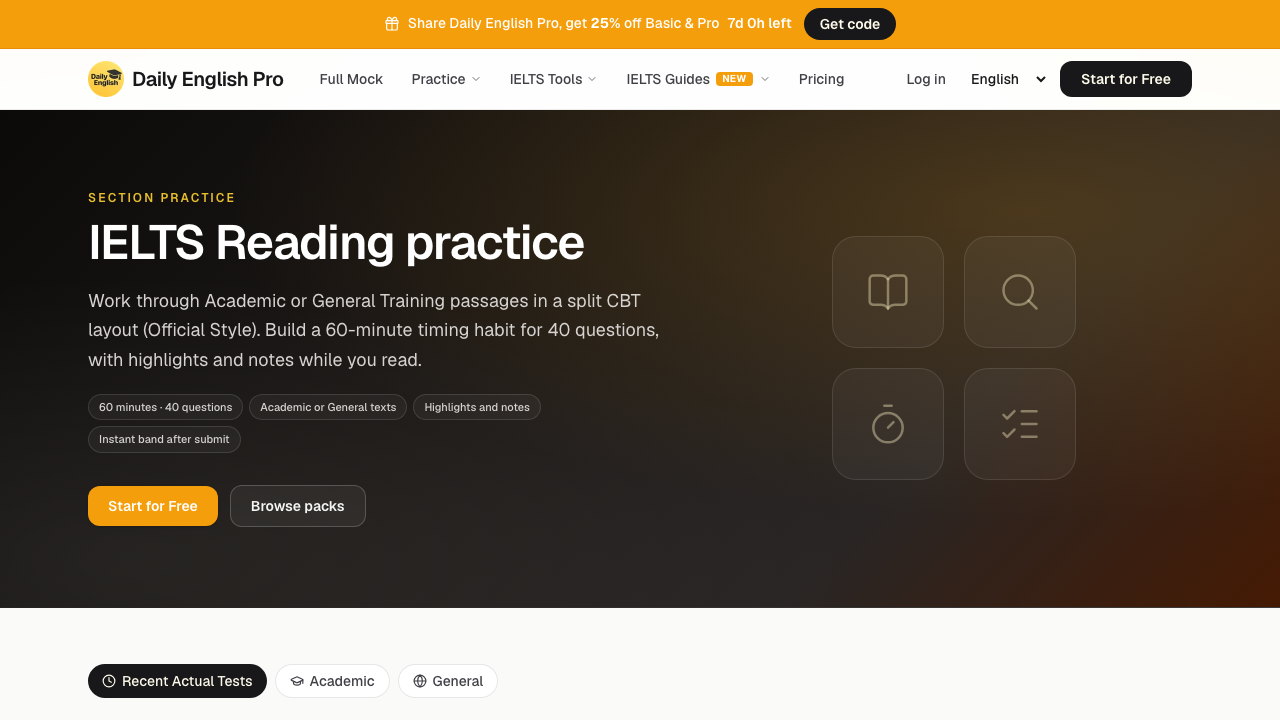
Daily English Pro offers Reading practice with timed passages and answer review, and full mock tests in a computer-based layout. Below we compare it with other sources and say when each is the right tool.
- Strict 60-minute timing across three passages
- Realistic passages of Academic or General Training difficulty
- All major question types, including headings, T/F/NG and summary completion
- Answer review that points to the evidence line in the text
- Enough papers that you do not memorise answers
Platforms compared for Reading
| Source | Best for | Limit |
|---|---|---|
| Daily English Pro Reading | Timed passages, CBT-style mocks, question-type drills | Independent, not official papers |
| Cambridge English IELTS | Authentic-style passages in book form | Manual timing and marking |
| IDP | Format info and sample content in some markets | Depth varies by country |
| IELTS Liz | Lessons on every question type | Not a timed simulator |
Daily English Pro: timed passages and drills
Use the Reading practice page for focused drills on one question type at a time. Our guides on timing and question types and True / False / Not Given explain the usual traps.
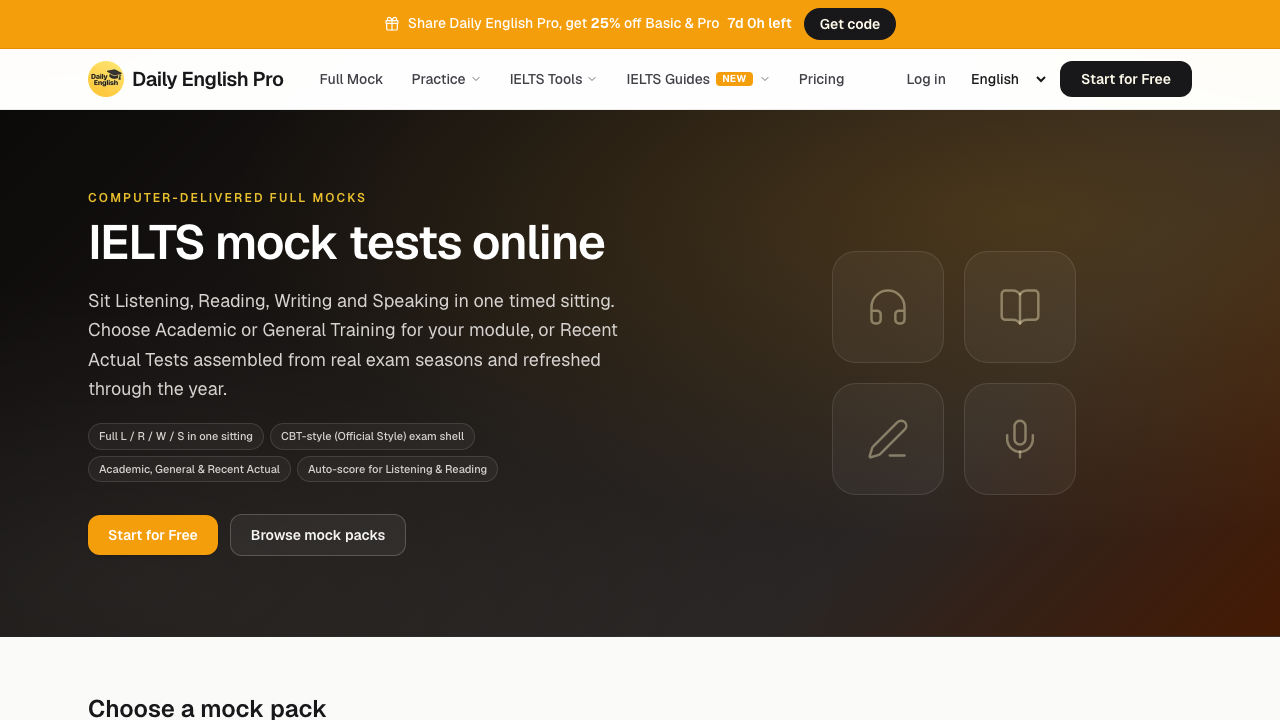
Once your accuracy on single types is steady, sit a full mock test. The goal is to finish all three passages with minutes left for checking, not to master passage one and rush passage three.
Books, official sources and tip sites
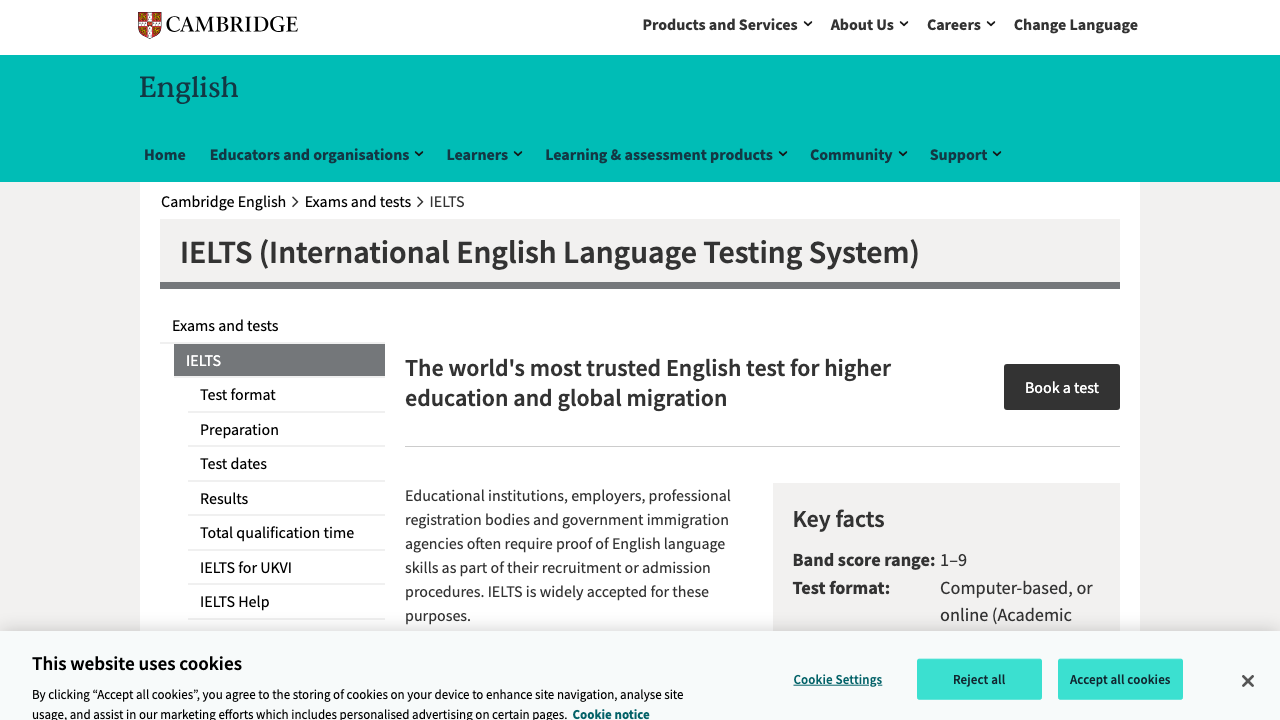
The Cambridge English IELTS page leads to the practice test books many teachers use. The passages feel authentic. You will need to enforce your own timer and check answers by hand.
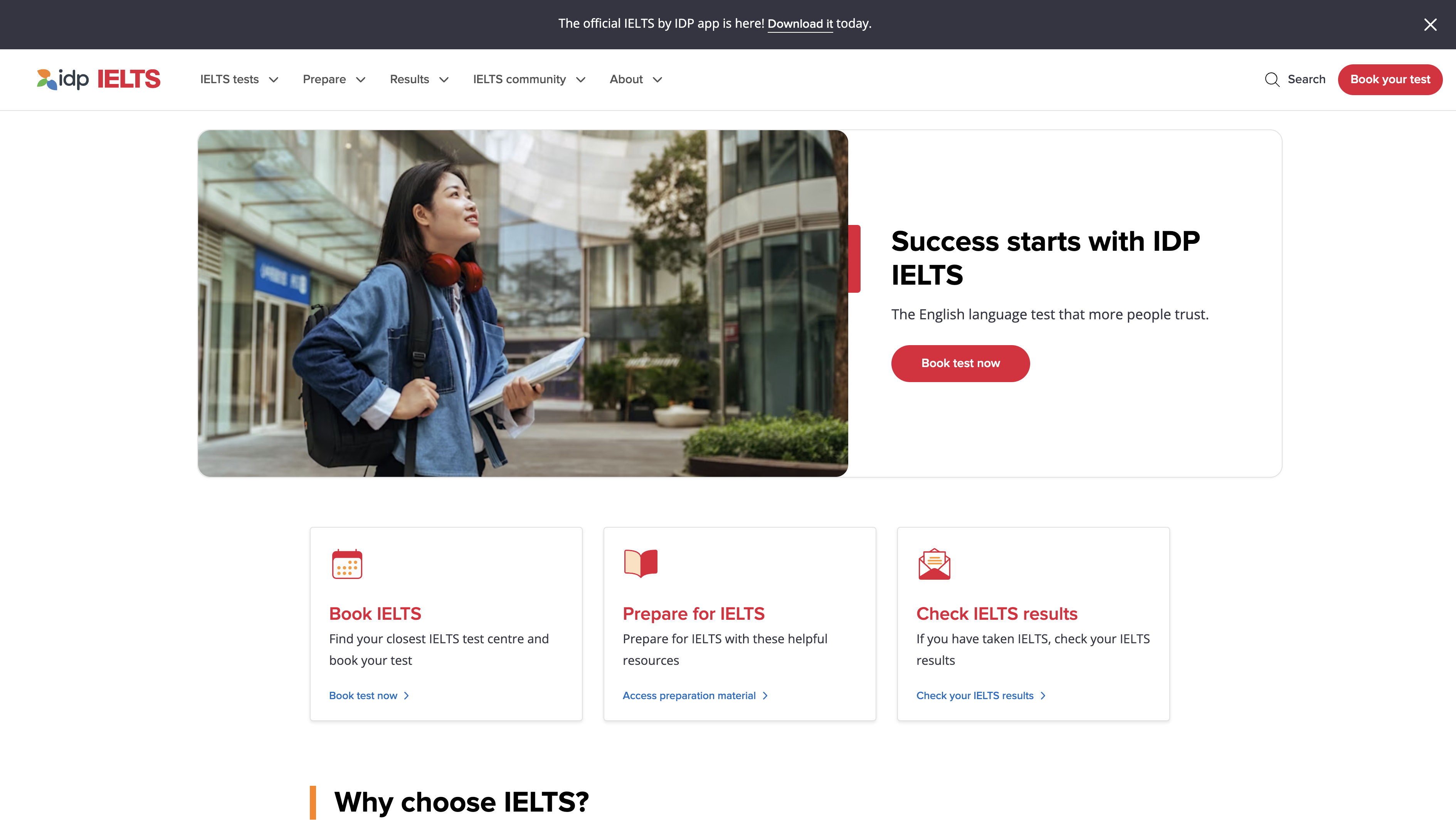
IDP IELTS publishes test information and prep offers in some markets. Check what is included in your country before you pay.
IELTS Liz is a strong free source for method: skimming, scanning, and how to approach each question type. Read the method, then practise it against the clock.
A reading routine that builds speed
- 1Identify the weakest question typeTake one timed set. List which types cost you most marks.
- 2Study the methodRead one targeted guide, such as matching headings, before practising.
- 3Drill 10 to 15 questionsWork untimed first, then repeat under time. Compare results.
- 4Sit a full passage set weeklyUse practice or a mock, 60 minutes, no pauses.
- 5Build vocabulary from passagesSave paraphrase pairs. The same synonyms recur across tests.
Criteria checklist for Reading platforms
Before you settle on a Reading source, check that it trains exam behaviour, not only comprehension. A quiet evening with an untimed blog passage feels productive and still leaves you slow on test day.
- Hard 60-minute timer across three passages
- Academic or General Training passages that match your module
- Headings, T/F/NG, matching and summary completion in the mix
- Answer keys that point to evidence lines or paraphrases
- Enough unique papers that you cannot memorise answers
- On-screen navigation if you booked computer-based IELTS
Mistakes that flatten Reading scores
- Reading every word of passage one, then rushing passages two and three
- Treating Not Given as a soft False
- Practising only your favourite question type
- Checking answers without finding the evidence sentence
- Building vocabulary lists you never reuse in timed sets
- Skipping full papers because section drills feel safer
When a score stalls, audit timing first. Many candidates already understand the text; they simply never reach the last ten questions with a clear head. Write your passage times on the score sheet so the next mock has a pacing baseline.
How to combine sources with Daily English Pro
Use tip sites and our Reading guides for method, Reading practice for timed volume, and mock tests for full-paper pacing. Cambridge books remain useful when you want an authentic-style paper checked by hand.
- 1DiagnoseTake one timed set. Note the question types and passage that cost the most marks.
- 2Learn the methodStudy one guide, such as True / False / Not Given or matching headings.
- 3Drill under timeComplete short sets on Daily English Pro, then a full 60-minute paper weekly.
- 4Transfer vocabularySave five paraphrase pairs from each paper and reuse them in the next timed set.
IDP and other official pages help you confirm format. They rarely replace a practice platform with volume. If you sit computer-based IELTS, keep most drills on screen so highlighting and scrolling stop stealing seconds on test day.
Keep tip-site reading short: one method page, then immediate timed practice. Long reading about Reading without a timer is the most common free-resource trap.
Frequently asked questions
Should I read the passage first or the questions first?+
There is no single answer. Many candidates skim the passage for structure, then read the questions and scan. Test both on timed papers and keep the method that scores higher.
How do I improve True / False / Not Given?+
Practise with an error log and focus on the difference between contradicting the text and not mentioning it. Our guide has worked examples.
Is computer-based Reading different?+
The content is the same, but navigation and highlighting differ. Practise on screen if you chose computer delivery.
Do free Reading tests count?+
Yes, if they are timed and reviewed. Free is fine as long as you can complete enough papers.