
IELTS GT Apology Letter Tips (2026)
Structure an IELTS General Training apology letter: admit the problem, explain briefly, show impact, offer amends, compare formal and informal tone, then practise with FAQs.
The job of an apology letter
An apology letter repairs trust after a missed meeting, broken arrangement, damaged item or late reply. Examiners look for a clear admission, a brief credible reason, awareness of the effect on the other person, and a practical offer to put things right.
Do not hide the apology inside excuses. Admit first, explain second, then focus on amends. Long self-defence usually weakens Task Achievement and tone.
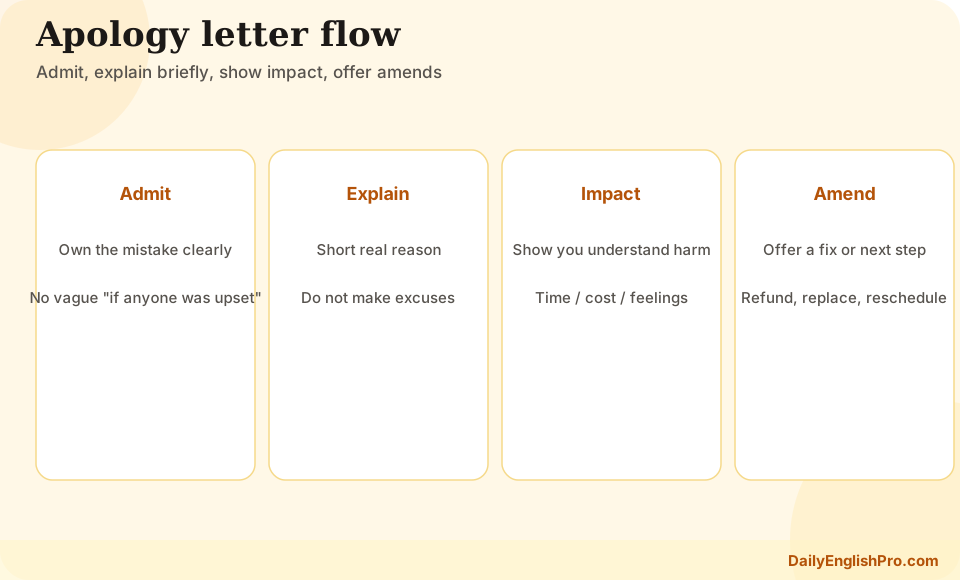
Cover the three bullets with a clean arc
Prompts often ask you to apologise, explain what happened, and say what you will do next. Map those verbs directly: admission and apology, short cause with time and place if useful, then amends such as a reschedule, replacement or repayment.
Keep explanations believable and short. A sudden illness, transport failure or family emergency is enough. Do not invent an epic story that crowds out the offer to fix the problem.
| Stage | Formal example focus | Informal example focus |
|---|---|---|
| Admit | Please accept my apologies for missing yesterday's briefing | I'm really sorry I missed your dinner |
| Explain | A delayed train after a signal failure | My neighbour needed urgent help with a lockout |
| Impact | You had to present the update without my figures | You cooked for everyone and I wasn't there |
| Amends | I can send the figures by 10 a.m. and meet at 3 p.m. | Let me cook next Friday and cover the ingredients |
- 1State the apologyName the exact event you are sorry for.
- 2Give a brief causeOne or two sentences only.
- 3Acknowledge impactShow you understand the inconvenience.
- 4Offer amendsPropose a specific, realistic next step.
Formal vs informal apology language
A manager or client needs formal language: full forms, calm vocabulary, and Yours sincerely or Yours faithfully. A friend can receive contractions and warmer phrases, but the structure stays the same: admit, explain, amends.
Avoid jokes in formal apologies. In informal letters, warmth is fine, but do not minimise a serious inconvenience with slang.
Work
Formal to a manager
Please accept my apologies for my absence from the Tuesday client call. I can circulate the notes within an hour and join a catch-up at your convenience.
- •Direct apology
- •Short cause later
- •Concrete amends
Personal
Informal to a friend
I'm so sorry I didn't make it to your flatwarming. The babysitter cancelled at the last minute. Can I take you out for lunch this weekend to make it up?
- •Contraction OK
- •Simple reason
- •Friendly offer
Sample planning notes (original)
Prompt idea: You missed an important team meeting because of an unexpected situation. Write to your manager. Apologise, explain what happened, and say how you will catch up.
Notes: Dear Mr Hassan; apology for 9 a.m. product review; blocked road after a traffic accident near station; impact on Q3 slide handoff; will email annotated slides by noon and attend a 20-minute catch-up tomorrow; Yours sincerely.
- Please accept my apologies for...
- I take full responsibility for...
- This happened because...
- I realise this caused...
- To make up for this, I will...
- Once again, I apologise for the inconvenience.
Mistakes that weaken apologies
Blaming others without ownership, writing only excuses, or offering vague amends such as I will try to do better all reduce clarity. Another mistake is mixing registers: Dear Sir or Madam followed by I'm gutted, mate.
Check that the amends paragraph answers the final bullet with a date, deliverable or meeting suggestion the reader can accept.
- Clear admission in the opening
- Explanation stays short and relevant
- Impact on the reader is acknowledged
- Amends are specific and realistic
- Greeting and closing match the relationship
Apology letter FAQ
Rewrite one formal apology as an informal note to a friend using the same three facts. The content stays; the register shifts.
How long should the explanation be?+
Usually two or three sentences. Enough to be credible, not so long that the amends disappear.
Do I need to accept full blame?+
Own your part clearly. You can mention circumstances, but the letter should not sound like an argument.
What if the prompt asks for a gift or compensation idea?+
Offer something proportionate: a replacement item, a new date, notes, or covering a cost. Keep it practical.
Can informal apologies use humour?+
Light warmth is fine with friends. Do not joke about a serious work failure in a formal letter.