
IELTS Task 2 Advantages Disadvantages Tips (2026)
Write clearer IELTS Task 2 advantages and disadvantages essays, including outweigh questions, weighing language, reliable structures, common mistakes and a Band 7 FAQ.
Separate discuss advantages from outweigh questions
Some prompts ask you to discuss the advantages and disadvantages of a development. Others ask whether the advantages outweigh the disadvantages. The first type needs balanced coverage of both sides. The second type still needs both sides, but your thesis must declare which side is heavier and why. Treating every advantages prompt as a soft opinion essay without comparison weakens Task Response on outweigh tasks.
Transport and education topics illustrate the difference. Discuss the advantages and disadvantages of free city-centre parking invites two developed sides. Do the advantages of free parking outweigh the disadvantages? requires the same content plus a comparative judgement, for example that congestion and pollution costs outweigh short-term convenience for drivers.
| Instruction | Must include | Thesis focus |
|---|---|---|
| Discuss advantages and disadvantages | Both sides developed | Preview both sides; opinion optional unless asked |
| Do the advantages outweigh...? | Both sides + comparison | State which side is stronger |
| Is this a positive or negative development? | Overall evaluation | Judge the development, not only list features |
Use weighing language that shows comparison
Outweigh answers need comparative reasoning, not two separate lists ending with Therefore the advantages are greater. Explain the criterion you use: scale of impact, number of people affected, long-term versus short-term effects, or cost versus benefit. For remote exams in education, a short-term technical risk may be outweighed by long-term access for rural students if support systems are in place.
Useful frames include: The main drawback is real, yet it affects fewer people than... or While X creates short-term inconvenience, Y produces lasting gains in... Avoid empty intensifiers such as hugely outweigh without a reason. The examiner awards Task Response for the comparison logic, not for strong adverbs.
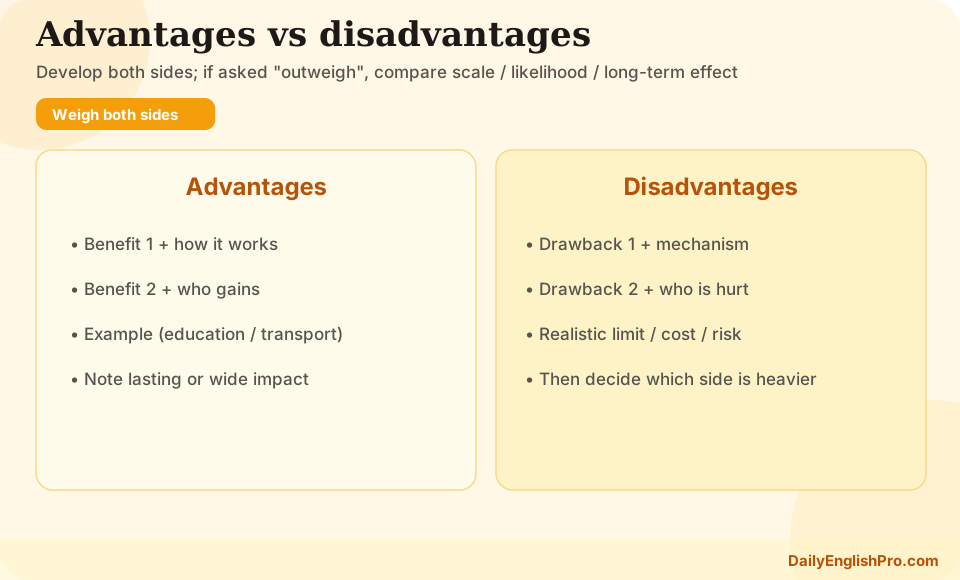
- Name the strongest advantage and the strongest disadvantage
- Choose one weighing criterion (scale, duration, fairness, cost)
- Show how the stronger side wins on that criterion
- Restate the outweigh result in the conclusion
Choose a structure that fits the instruction
A reliable four-paragraph pattern is: introduction with paraphrase and purpose or judgement; Body 1 on advantages; Body 2 on disadvantages (with weighing if required); conclusion restating the overall answer. For outweigh tasks, Body 2 often develops the weaker side and then explains why it does not cancel the stronger side, or Body 1 takes advantages and Body 2 compares disadvantages against them.
Do not write five micro-advantages in one paragraph. Select one or two substantial points and develop them. A thin list looks like Band 6 Task Response even when vocabulary is ambitious. In work-related prompts, for example, develop the advantage of flexible hours through productivity mechanisms rather than naming flexibility, happiness and work-life balance as three undeveloped bullets.
- 1Classify the taskDecide whether you must discuss only, weigh, or judge positive versus negative.
- 2Pick one point per sideChoose the strongest advantage and disadvantage you can explain fully.
- 3Add a criterionFor outweigh tasks, decide how you will compare impact.
- 4Write to the mapKeep each body paragraph on one controlling idea.
Weak
List-style body
Free parking helps drivers, shops and tourists. It is convenient and saves money.
- •Multiple undeveloped claims
- •No mechanism
- •Hard to weigh later
Stronger
Developed body
Free central parking encourages more car trips into already crowded streets, which lengthens bus journey times for non-drivers.
- •One clear claim
- •Cause-effect shown
- •Ready for comparison
Common mistakes that lower the band
The most frequent mistake on outweigh questions is discussing both sides equally and never answering which is greater. Another is inventing an agree/disagree thesis for a discuss-advantages prompt when no opinion was required. A third is mixing discussion-of-views language with advantages language, which confuses the essay type.
Language mistakes also appear in mirrored sentences: The advantage is X. The disadvantage is not X. Examiners want distinct ideas. If the advantage of electric buses is cleaner air, the disadvantage should not simply be that air is not cleaner; choose a real trade-off such as high purchase costs or charging infrastructure gaps.
- Instruction classified before planning
- Each side has explanation, not only labels
- Outweigh thesis states a comparative result
- Conclusion matches the introduction's judgement
- Examples stay relevant to education, transport or work contexts
Timed practice focus for this essay type
Practise classifying ten past-style prompts in five minutes: discuss only, outweigh, or positive/negative. Then write two full essays under time, one of each main subtype. After writing, highlight every comparative phrase. Outweigh essays should contain clear weighing; pure discuss essays may preview both sides without forcing a winner.
When reviewing, check whether your disadvantage paragraph secretly argues against your own advantage using the same idea. Distinct points make comparison possible. Keep a short bank of weighing frames you can adapt, but always fill them with topic-specific logic.
下一步練習
Frequently asked questions
Do I need an opinion in every advantages essay?+
Only when the question asks you to weigh, judge positive/negative, or give your view. A plain discuss advantages and disadvantages task mainly needs both sides developed.
Can I write more about advantages than disadvantages?+
Yes if the task is outweigh and advantages are your stronger side. Still explain the disadvantage enough for a fair comparison.
How many advantages should I include?+
One or two well-developed points beat a long undeveloped list. Depth matters more than quantity for Band 7.
Is outweigh the same as agree or disagree?+
No. You must discuss both sides and compare their weight. Agree/disagree focuses on defending a position on a statement.