
Best IELTS Writing Checkers and Feedback Tools
How IELTS writing checkers work, what they miss, and how to use them. Compare Daily English Pro with descriptors, teacher sites and human feedback.
What a writing checker can and cannot do
A writing checker reads your essay and returns comments on Task Response, Coherence and Cohesion, Lexical Resource and Grammatical Range and Accuracy. That is useful because most learners never get four-criterion feedback outside a class. It is not the same as an examiner mark, and no tool can promise your real band.
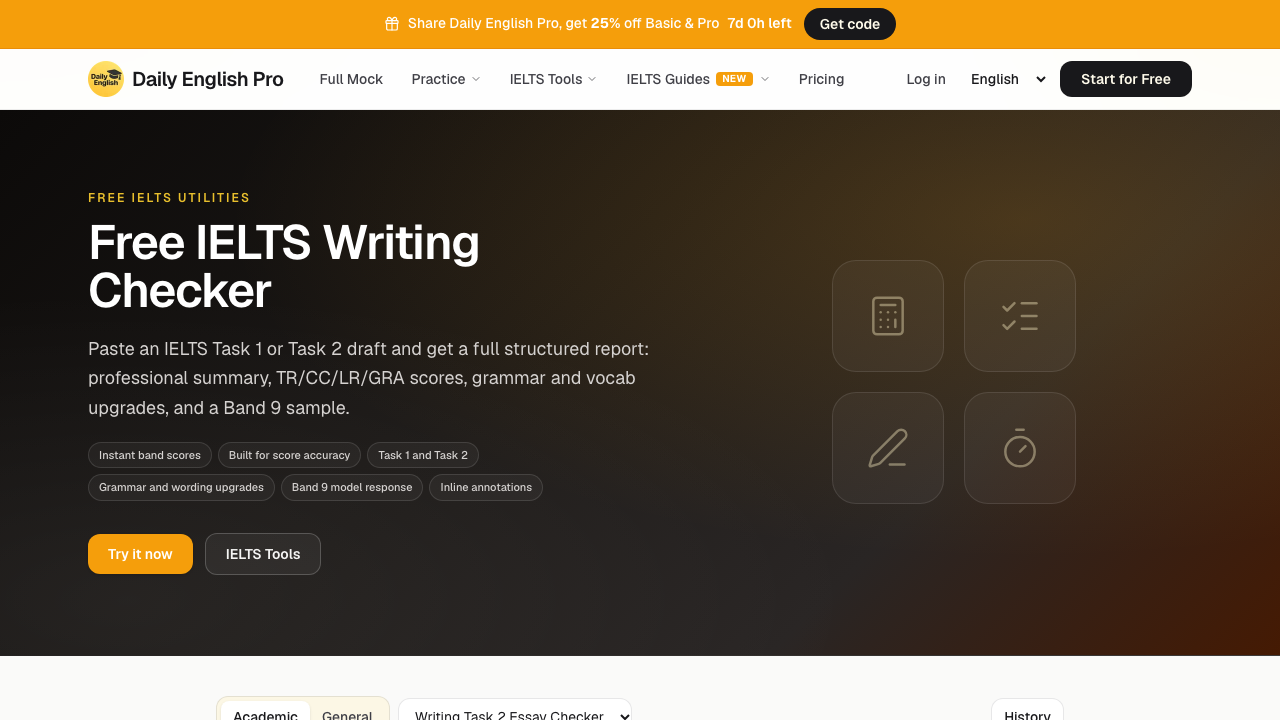
Daily English Pro offers a free-to-try Writing Checker with criterion-style feedback on Task 1 and Task 2. Below we compare that approach with other feedback sources so you can pick a loop that fits your budget.
| Feedback source | Speed | Depth | Best use |
|---|---|---|---|
| Daily English Pro Writing Checker | Minutes | Criterion-style comments | Frequent drafts and revision cycles |
| Public band descriptors (British Council) | Self-paced | High, if you mark honestly | Calibrating your own judgment |
| Teacher-led lessons (IELTS Liz) | Self-paced | Model answers and method | Learning structure and ideas |
| Human tutor or examiner | Days | Highest | A few key drafts before test day |
Criteria that matter when choosing a checker
- Maps comments to the four official criteria, not generic grammar tips
- Explains why a sentence is weak and shows a better version
- Handles both Task 1 (report or letter) and Task 2
- Gives consistent results if you paste the same essay twice
- States clearly that the output is an estimate, not an official score
Daily English Pro Writing Checker in practice
The workflow is simple. Write a response on Writing practice or from a past prompt, paste it into the checker, and review each criterion note. Rewrite one paragraph at a time rather than the whole essay.
Strengths
Works well for
Fast loops when you write often.
- •Spotting repeated grammar patterns
- •Checking paragraph focus and task coverage
- •Tracking improvement over several drafts
Limits
Be careful with
Tools can miss context and over-reward polished but empty prose.
- •Idea quality and relevance
- •Borderline band 6.5 to 7.5 judgments
- •Memorised templates that sound fluent
Pair it with our Writing guides and the Task 2 paragraph structure guide so each fix has a method behind it.
Official descriptors and teacher sites
The British Council Take IELTS site publishes the public Writing band descriptors. Scoring your own essay against them is slow but teaches the criteria better than any automatic tool.
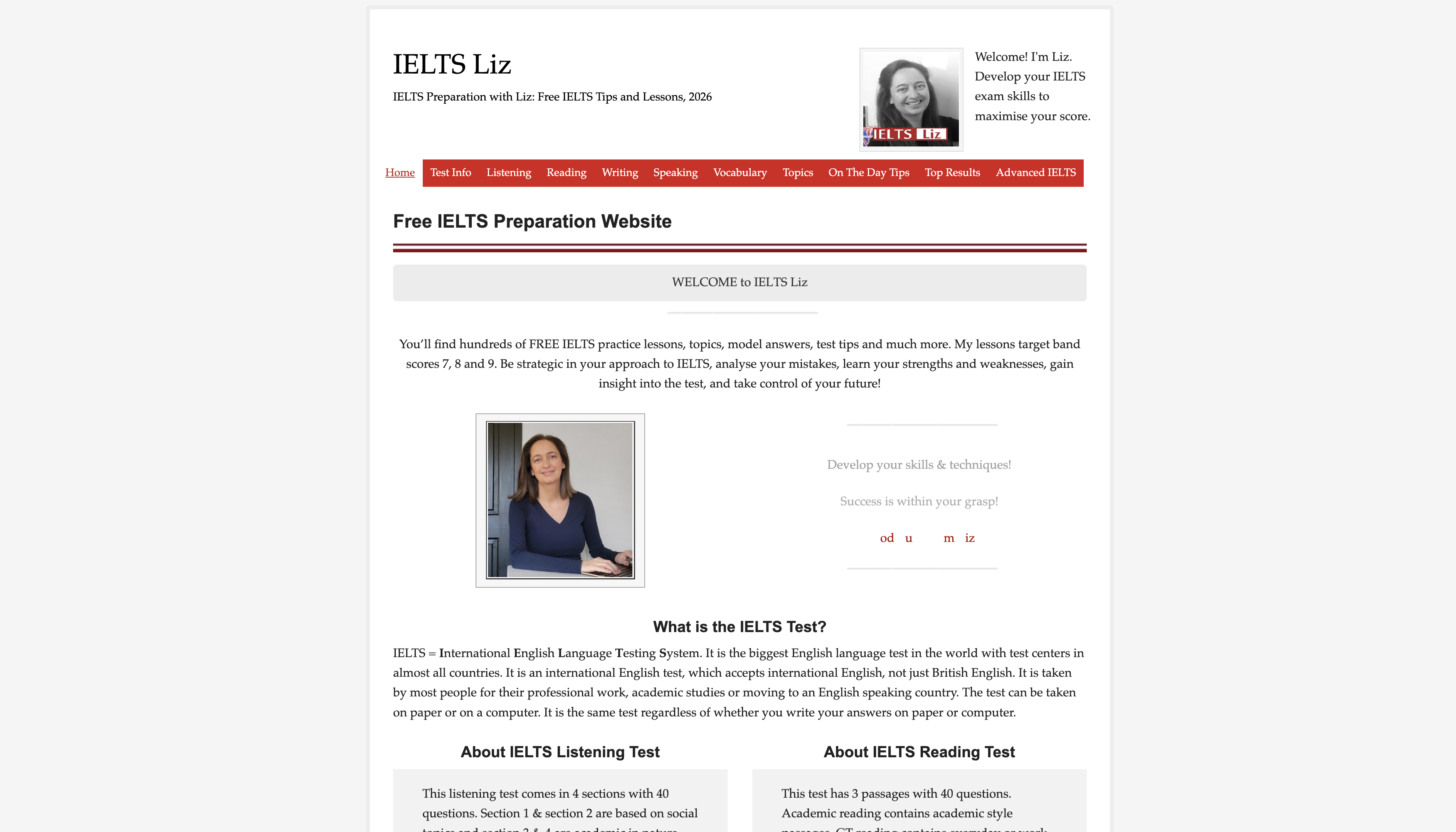
IELTS Liz provides lessons and model answers that show what strong structure looks like. It is a teaching site rather than a checker, so you compare your work to examples yourself.
A feedback loop that works
- 1Write under time40 minutes for Task 2, 20 for Task 1. No dictionary, no tool until you finish.
- 2Self-mark with descriptorsSpend 10 minutes noting your estimated band for each criterion before using a checker.
- 3Run the checkerPaste the draft into the Writing Checker. Note where its comments differ from yours.
- 4Rewrite one weaknessPick the lowest criterion and rewrite one paragraph. Save both versions.
- 5Get one human reviewBefore test day, share a final draft with a tutor or experienced peer.
Mistakes when using writing checkers
- Chasing a higher estimated band without rewriting the weak paragraph
- Accepting every suggestion, including ones that change your meaning
- Pasting untimed essays and treating the score as exam readiness
- Ignoring Task Response comments because grammar notes feel easier
- Running the same memorised template through five tools
- Never comparing tool output with public band descriptors
A checker is a revision partner. If you do not rewrite, you are collecting opinions, not improving Writing. Keep both versions of each essay so you can see whether the second draft actually fixed the lowest criterion.
How to combine checkers with Daily English Pro
Write under time on Writing practice, get criterion notes from the Writing Checker, and study method in our Writing guides. Use British Council descriptors once a week to calibrate your own judgment.
- Monday: timed Task 2 on a fresh prompt
- Tuesday: checker pass, then rewrite one paragraph
- Wednesday: Task 1 letter or report with the same loop
- Weekend: full Writing section inside a mock test
When the checker and your self-mark disagree, trust the public descriptors for Task Response first. Tools often reward polished sentences that wander off the question. If your ideas are thin, no amount of grammar polish will hold a band 7.
Track three metrics only: essays written under time, paragraphs rewritten after feedback, and criteria that improved between draft one and draft two. That log tells you whether the checker loop is working better than buying another correction package.
Frequently asked questions
Are IELTS writing checkers accurate?+
They are directionally useful and often weaker on borderline bands. Use them for language and structure feedback, and verify bands against public descriptors.
Is it safe to paste my essay into an online tool?+
Check the privacy terms of any tool before you paste. Avoid personal details in practice essays.
How many drafts should I run through a checker?+
Two to four drafts per week is plenty. Feedback only helps if you rewrite between runs.
Can a checker replace a tutor?+
For routine revision, yes. For final polish before an important exam, a human reviewer is still wise.
Does Daily English Pro charge for the checker?+
Limits and plans change. See the live pricing page for the current free and paid terms.