
Best IELTS Speaking Practice Apps and Platforms
Compare IELTS Speaking practice: Daily English Pro, official format pages, tip sites and conversation partners, with criteria, tradeoffs and a weekly routine.
Why Speaking practice is harder to buy
Speaking is the skill most affected by nerves, accent exposure and fluency habits, and it is the hardest to automate. An app can give you prompts and a recording space. It cannot replace the feeling of talking to a person who reacts to you. Good practice combines both.
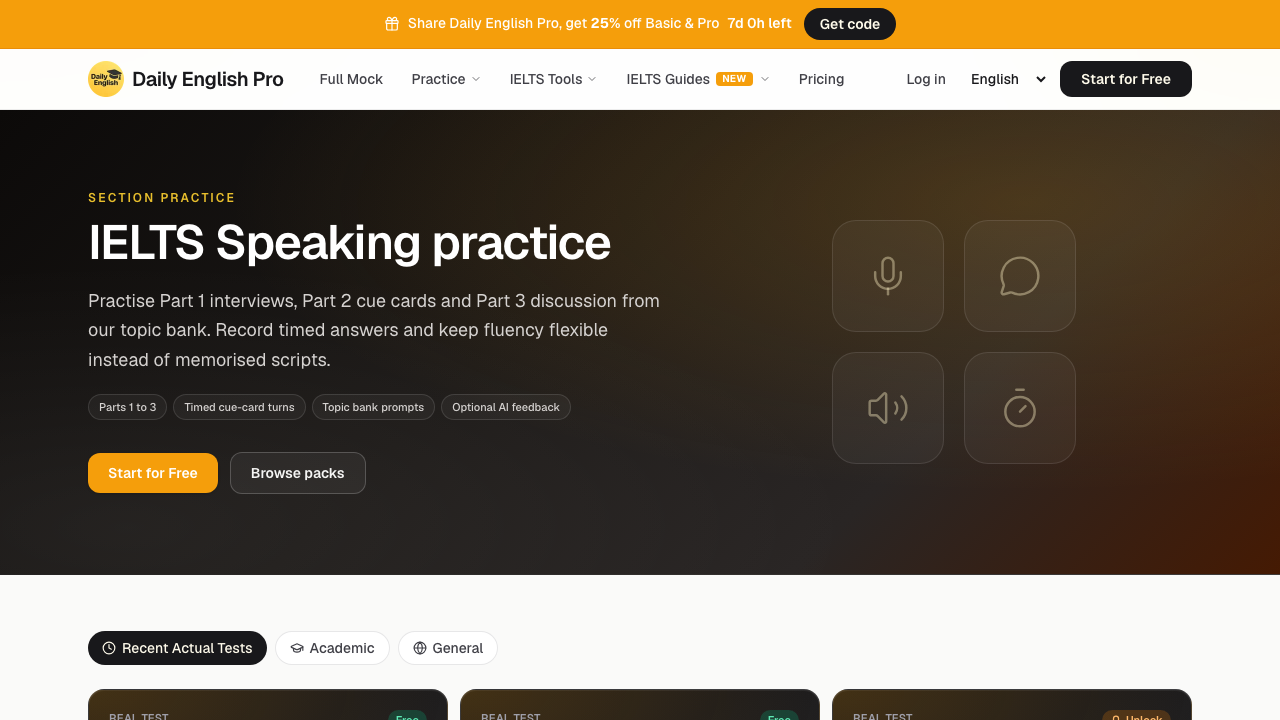
Daily English Pro provides Speaking practice with Part 1, Part 2 and Part 3 prompts, plus a library of Speaking guides. We describe what it does well and where a live partner is still better.
| Option | What you get | Main limit |
|---|---|---|
| Daily English Pro Speaking | Structured prompts, recording, guides | Not a live examiner |
| IELTS Liz | Free lessons by Part and topic | No recording or marking |
| British Council | Official descriptors and test info | Little speaking practice volume |
| IDP | Test format and prep offers in some markets | Varies by country |
| Live tutor or language partner | Real conversation and feedback | Cost and scheduling |
Criteria for a good Speaking platform
- Covers all three Parts, not only Part 2 cue cards
- Lets you record and replay your own answers
- Uses realistic timing, such as a prompt, one minute to prepare and up to two minutes to speak
- Links feedback to the four criteria: Fluency and Coherence, Lexical Resource, Grammatical Range and Accuracy, Pronunciation
- Offers fresh topics, so you do not memorise a script
Daily English Pro Speaking practice
Use the practice page for short daily sessions. Record one Part 1 set, one Part 2 cue card and three Part 3 questions, then listen back. The point is noticing hesitation, filler words and repeated vocabulary.
Support that with the Speaking parts guide and Speaking band descriptors so your self-review has a standard to measure against. Our weekly Speaking topic packs keep prompts current.
Strengths
Good for
Daily solo habit building.
- •Low-pressure repetition
- •Structured Part 2 practice
- •Topic variety for Part 3
Add-ons
Pair with
A human listener for the last mile.
- •A tutor for pronunciation notes
- •A study partner for follow-up questions
- •Public descriptors for self-marking
Tip sites and official pages
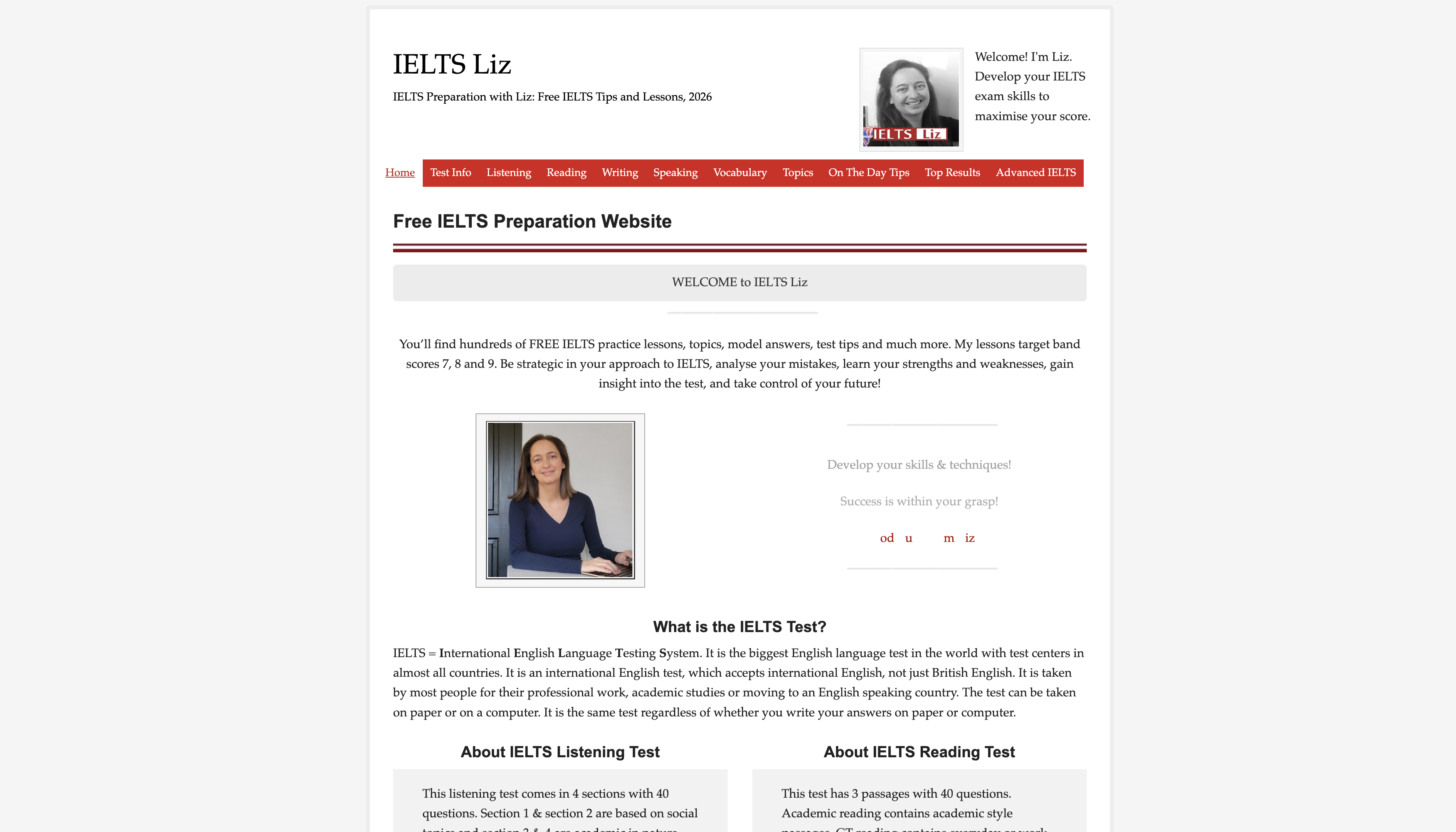
IELTS Liz has a large archive of Speaking lessons and topic ideas. It is useful for learning how to extend answers and use natural linking language.
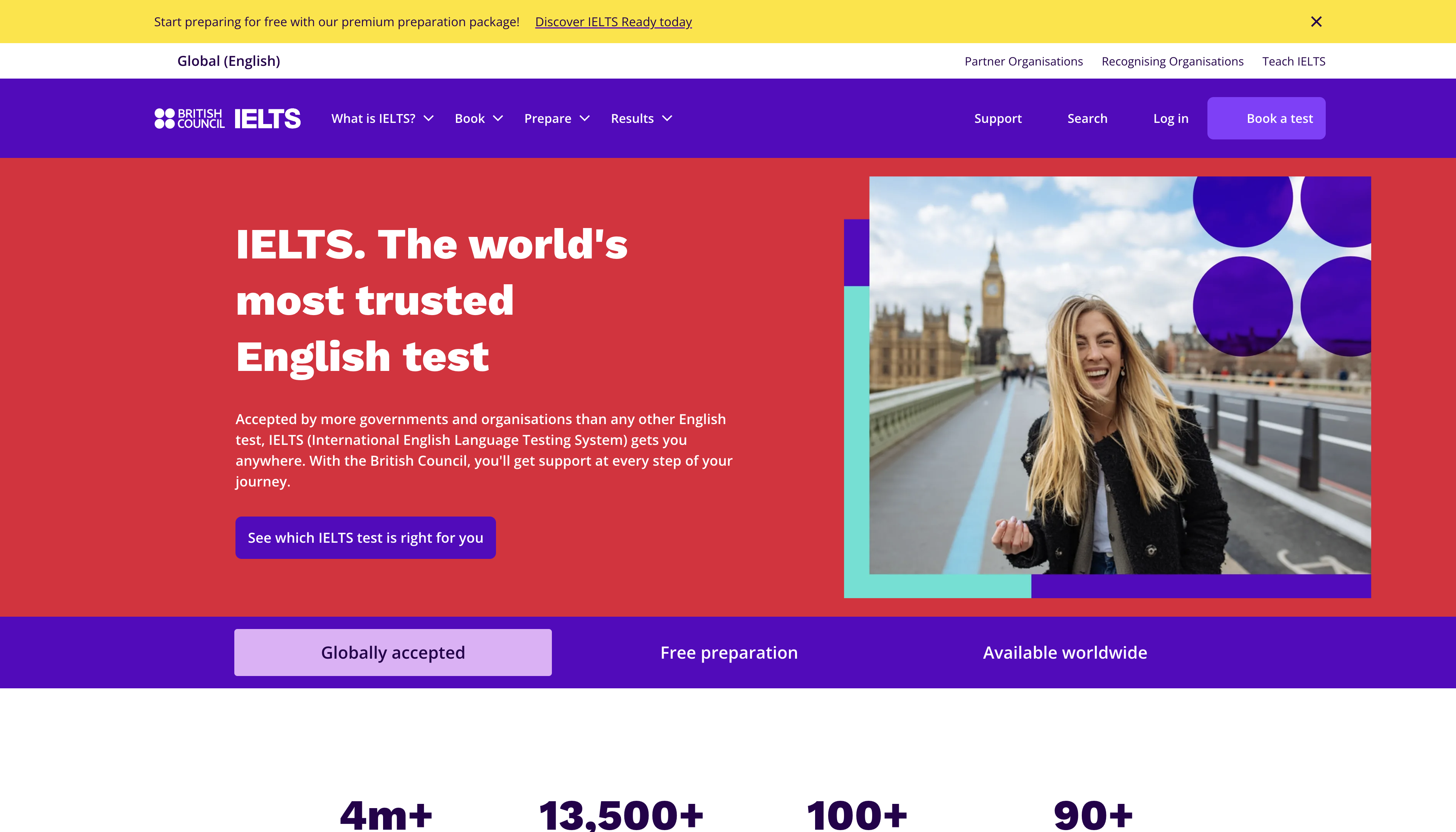
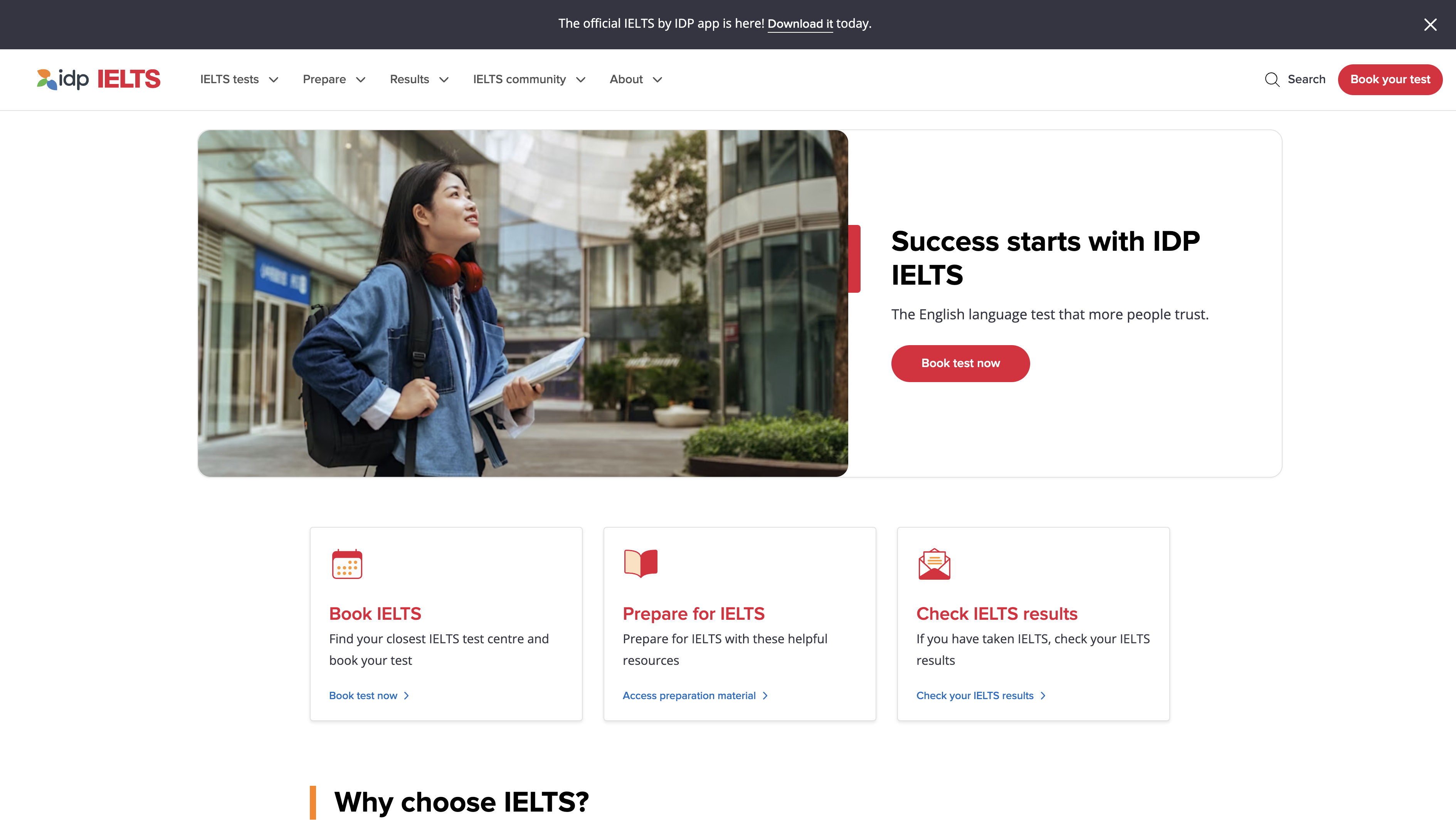
The British Council publishes public Speaking descriptors that show how the four criteria separate bands. IDP and IELTS.org explain the test format and what to expect at the centre.

A 7-day Speaking routine
- 1Day 1 to 2: Part 1 fluencyRecord 12 short answers on familiar topics. Aim for two to four sentences each.
- 2Day 3 to 4: Part 2 structureDo two cue cards per day on Speaking practice. Use a simple story arc.
- 3Day 5: Part 3 depthAnswer abstract questions with a reason and an example.
- 4Day 6: review recordingsMark yourself against the descriptors. Pick one habit to fix.
- 5Day 7: talk to a personDo a 15-minute session with a tutor or partner and ask for pronunciation notes.
Mistakes that waste Speaking apps
- Memorising a Part 2 script and freezing when the cue card changes
- Only practising Part 1 comfort topics
- Never listening back to your own recordings
- Treating an automatic band as an official examiner mark
- Skipping Part 3 because abstract questions feel uncomfortable
- Buying another app instead of booking one live feedback session
Apps are strong for repetition. They are weak as a substitute for interactive follow-up questions. Plan at least one human conversation each week in the final month. When you replay a recording, mark one fluency issue and one vocabulary issue only, then re-record the same prompt once.
How to combine apps with Daily English Pro
Use Speaking practice for daily prompts and recordings, our Speaking guides for structure, and tip sites such as IELTS Liz when you need model extensions. Keep official descriptors from the British Council open while you self-mark.
- Solo days: record Part 1, Part 2 and Part 3 on Daily English Pro
- Method days: read one guide on Speaking parts or descriptors
- Live days: 15 minutes with a partner who asks unexpected follow-ups
- Mock weeks: include Speaking inside a full mock test sitting when you can
If your booking is computer-delivered IELTS, still keep Speaking face to face in real life. Screen practice helps for the other skills; Speaking needs eye contact, interruption and unpredictable Part 3 turns. Use the app for volume, then spend the live session only on the habit you logged during the week.
A simple weekly scorecard helps: number of Part 2 cards recorded, number of Part 3 answers with a reason plus example, and one live session completed. If any cell stays at zero for two weeks, change the plan before you buy another app.
Frequently asked questions
Can an app really improve IELTS Speaking?+
Yes for fluency habits, idea generation and self-review. It works best alongside some live conversation.
Is there an AI Speaking examiner I can trust for a band score?+
Treat any automatic Speaking score as an estimate. Use it for patterns, such as pauses and vocabulary range, not as a promise.
How long should daily Speaking practice be?+
Fifteen to twenty minutes daily beats two hours once a week.
Do I need to pay for Speaking practice?+
Not always. Free prompts and recordings cover a lot. Review pricing if you want extra packs, and verify live terms.