
IELTS GT Advice Letter Tips (2026)
Give useful IELTS General Training advice in a letter: show empathy, offer options, make a clear recommendation, keep semi-formal or informal tone, with outline and FAQ.
Advice letters are helpful, not lecture-like
Advice letters usually go to a friend or someone you know personally. The prompt may ask you to respond to a worry about travel, study, housing or work. Strong answers show that you understand the problem, offer practical options, and end with a clear recommendation.
Register is usually informal or warm semi-formal. Stay supportive. Avoid sounding like a strict teacher unless the relationship and situation require a more careful tone.
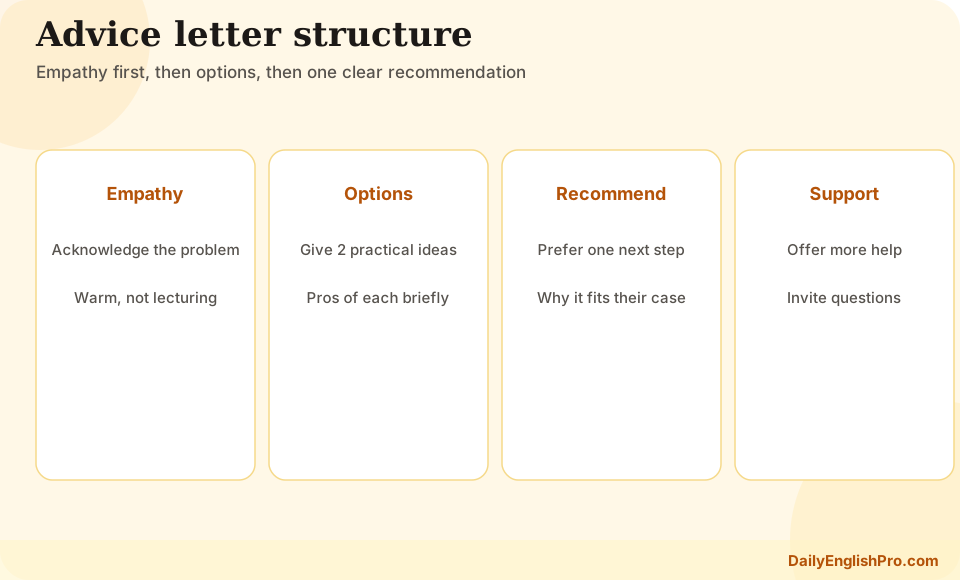
Build empathy, options and a recommendation
Open by acknowledging the situation: first solo trip, new city, difficult course choice. Then answer each bullet with concrete tips. Vague lines such as Just be careful help almost nobody.
When bullets ask for advice on packing, safety and money, give named actions: download offline maps, carry a card and some cash, book the first two nights before arrival.
| Move | Purpose | Example focus |
|---|---|---|
| Empathy | Show you heard the worry | I'd feel nervous too before a first long trip alone |
| Option A | Practical path | Book hostels in advance for week one |
| Option B | Alternative path | Join a short group tour for the first city only |
| Recommendation | Decision help | I'd book the first hostels and keep later days flexible |
- 1AcknowledgeName the challenge in friendly language.
- 2Answer bullet 1Give specific, usable advice.
- 3Answer bullet 2Add a second practical area with detail.
- 4RecommendChoose a priority and offer further help.
Sample outline for a travel-advice letter
Prompt idea: Your friend is planning a three-week backpacking trip and feels anxious. Write a letter. Calm their worries, suggest how to prepare, and recommend one region to start with.
Outline: Dear Alex; empathy about first solo travel; prepare with copies of documents, a simple packing list, and two booked nights in Bangkok; start in northern Thailand for easy transport and guest-house support; offer a call next week; Best wishes.
Weak
Thin advice
Don't worry. Travel is fun. Be safe and enjoy yourself.
- •No steps
- •No options
- •Easy to ignore
Strong
Useful advice
I'd pre-book the first two nights, carry a paper copy of your passport photo page, and start in Chiang Mai where guest houses are used to new travellers.
- •Actionable
- •Prioritised
- •Fits the worry
Language for soft suggestions
Advice language should leave room for the other person's choice while still being clear. Soft modals and conditional suggestions work well in informal letters. If the prompt asks for your opinion, state it directly after the options.
- If I were you, I'd...
- One option is... Another is...
- What worked for me was...
- I'd recommend starting with... because...
- If you want, I can send you...
- Let me know how the planning goes.
- Tone stays friendly and consistent
- Each bullet has concrete advice
- At least one clear recommendation appears
- Details are realistic for the situation
Advice letter pitfalls
Do not turn the letter into your own travel diary. Personal experience helps only when it teaches a transferable tip. Do not give unsafe or extreme instructions. Do not forget the recommendation if the prompt asks which choice is better.
If one bullet asks you to warn about a risk, be specific and calm: avoid unlicensed taxis at night, or keep medicines in your hand luggage.
Advice letter FAQ
Practise rewriting advice for a friend and for a younger cousin. The tips can stay similar; the softness of the language may change.
Is an advice letter always informal?+
Usually yes when the reader is a friend. If you advise a neighbour or colleague you do not know well, use warm semi-formal language.
How many suggestions should I give?+
Enough to cover the bullets fully. Two options plus one recommendation is a reliable pattern when the prompt asks what to do.
Can I say I don't know?+
Better to invent plausible, helpful advice. The situation is imaginary, and examiners expect a complete response.
Should I ask questions back?+
A short offer of further help is fine. Do not replace advice with a list of questions the friend must answer first.