
Best IELTS Mock Test Platforms
How to judge IELTS mock platforms: timing, computer layout, scoring and review. A fair look at Daily English Pro, official sources, Cambridge and tip sites.
What makes a mock test worth taking
A mock is only useful if it behaves like the real sitting. That means fixed timing, one audio play in Listening, no pausing, and a result you can break down by question type. A pretty interface with loose timing is just a worksheet.
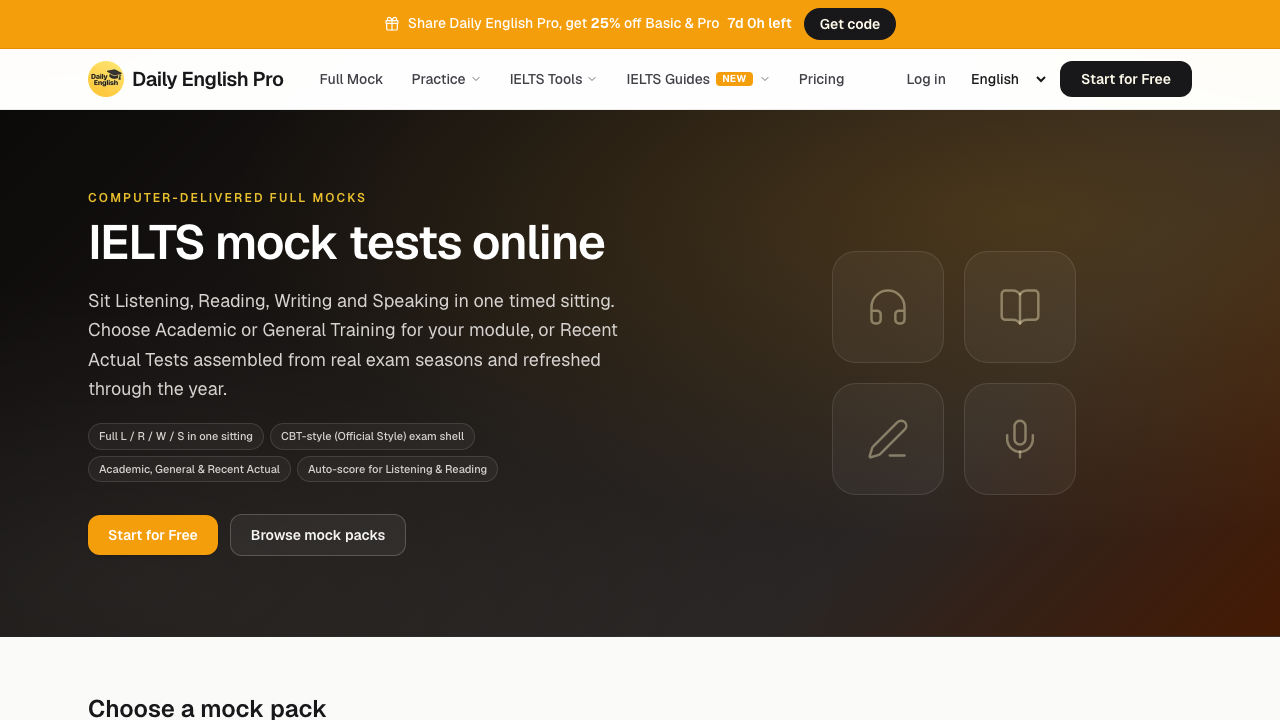
Daily English Pro built its mock tests around that idea, with a computer-based layout for Listening, Reading and Writing, and a Speaking section you can rehearse. Below we compare it with other ways to take a mock, and we are open about where each one fits.
- Timing: is each section enforced, with realistic transfer time in Listening?
- Interface: does it match the computer-based test you will sit, if you chose computer delivery?
- Marking: are Listening and Reading scored automatically with a band estimate?
- Review: can you see which question types cost you marks?
- Freshness: how many different papers can you take before repeating?
Mock options compared
| Source | Format | Strength | Limit |
|---|---|---|---|
| Daily English Pro | On-screen IELTS official style computer test | Timed sections, instant L/R marking, tools nearby | Not official; Writing and Speaking feedback is estimated |
| Cambridge English IELTS | Books with audio | Authentic-style papers from a trusted publisher | No on-screen timer or live marking |
| British Council | Sample questions and prep pages | Official voice and band descriptors | Small volume of full papers |
| IDP | Sample content, prep offers in some markets | Close to the test provider | Varies by country; verify what is included |
| IELTS.org | Format information | Authoritative overview | Not a mock test library |
Daily English Pro: the IELTS official style computer test mock
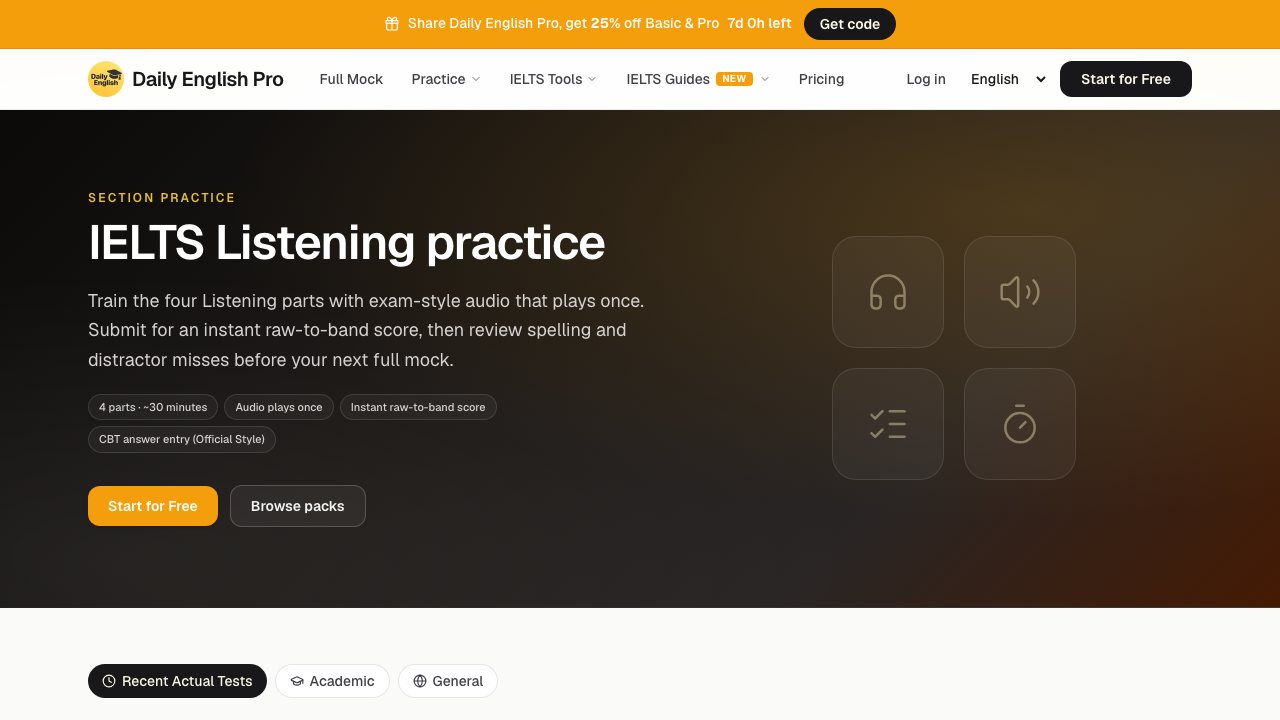
The strongest reason to use Daily English Pro for mocks is rehearsal of the on-screen experience: timer pressure, answer entry, and moving between questions. Pair a mock with Listening practice to fix single question types afterward.
Be realistic about Writing and Speaking. The Writing Checker is useful for revision cycles, but it is not an official examiner. If a band 7 is critical for a visa, get a human opinion on at least one draft and one recorded Speaking set.
Cambridge books and official samples
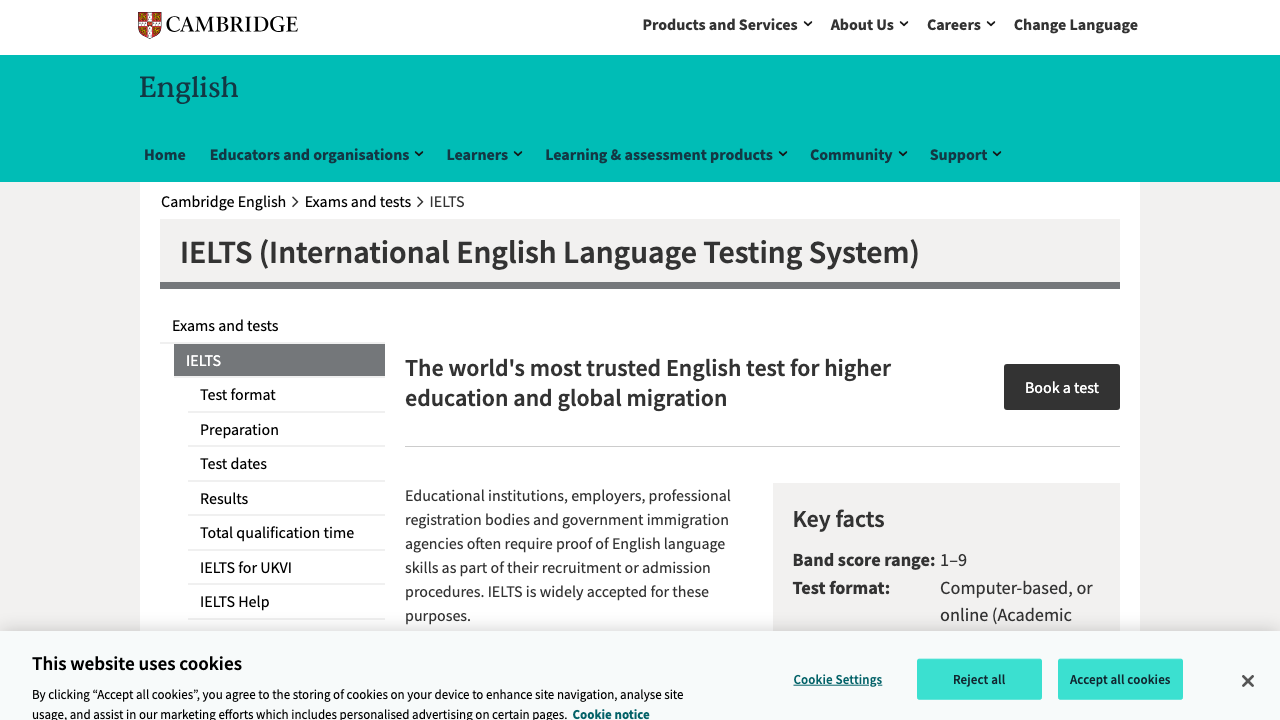
The Cambridge English IELTS page is where many teachers start when they ask for authentic-style papers. Practice books are respected for their question style and audio.
The downside is workflow. You must time yourself, play audio once, check answers by hand and count your own band. If you sit the computer-based test, practising only on paper leaves a gap in screen skills. Mix both when you can.
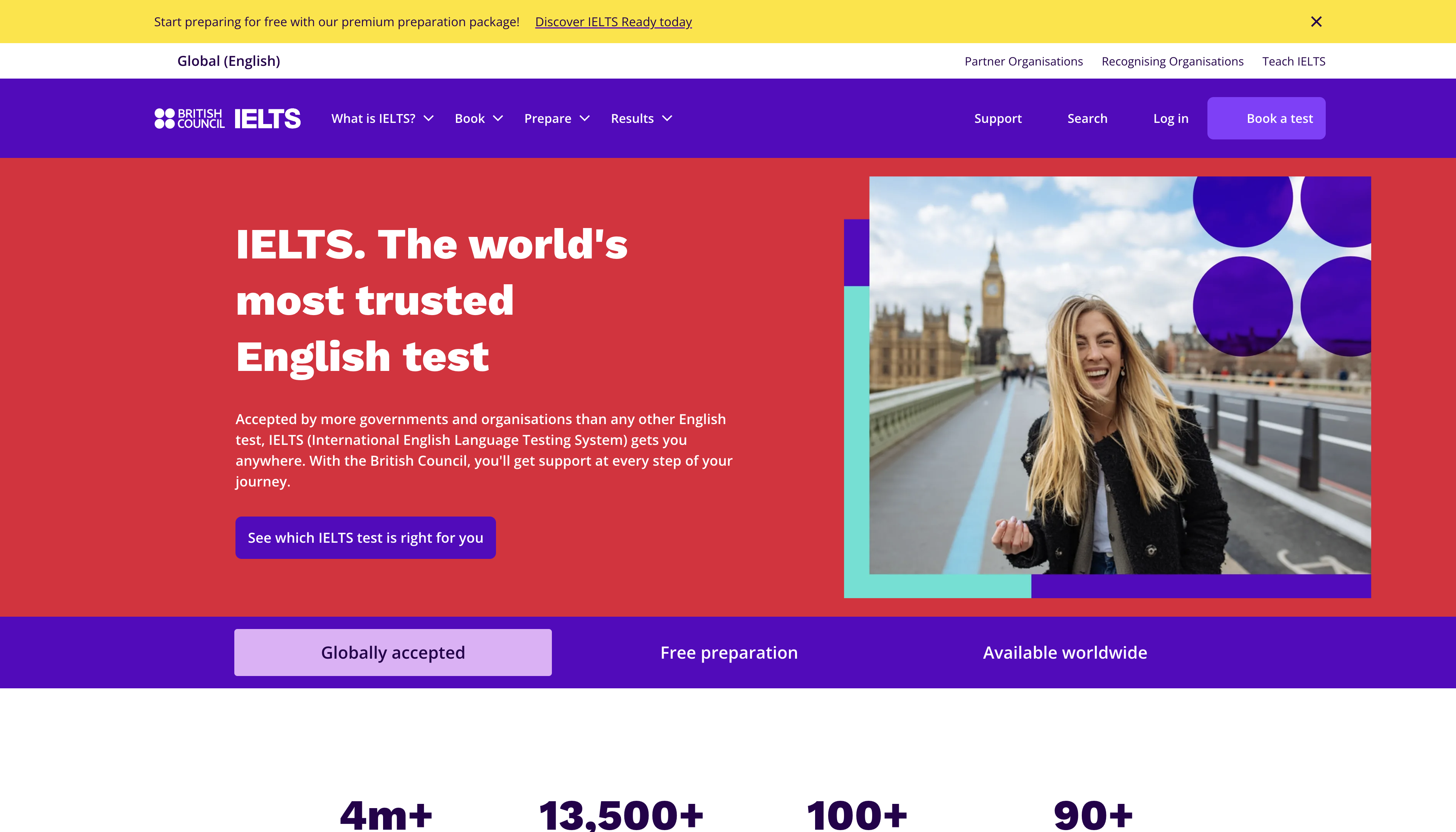
British Council and IDP both publish official preparation pages. They are valuable for rules and descriptors, and sample questions confirm the style.
How often should you mock?
- 1Before you study: one diagnosticSit a full mock test cold. Record your scores by skill, not just overall.
- 2During study: one mock every 10 to 14 daysSpend the days between on targeted drills from section practice.
- 3Final 3 weeks: weekly mocksUse the same time of day as your test. Treat each as a rehearsal, with no pauses.
- 4After every mock: audit errorsSort mistakes into timing, spelling, paraphrase and question-type errors. Fix the largest group first.
Criteria checklist for mock platforms
A mock platform earns a place in your plan only if it creates exam pressure and usable feedback. Pretty dashboards without section timers are study apps, not mocks.
- Section timing you cannot casually pause while scoring
- One-play Listening audio with realistic transfer behaviour
- Computer layout practice if you booked the IELTS official style computer test
- Automatic Listening and Reading marking with question-type breakdown
- Clear statement that Writing and Speaking scores are estimates
- Enough distinct papers for your remaining weeks
Mistakes that ruin mock value
- Pausing between sections and still calling it a full mock
- Checking answers mid-paper
- Taking three mocks in a weekend with no review
- Ignoring Speaking and Writing because they are harder to self-mark
- Practising only on paper when your booking is computer-based
- Changing platforms after every disappointing score
The mock is the measurement. The days between mocks are where scores move. Protect both. After each sitting, write one sentence naming the skill that blocked your target band, then schedule drills for that skill before the next mock.
How to combine mocks with Daily English Pro
Sit full papers on mock tests, then repair weak skills in section practice. Use Cambridge books when you want a publisher-style paper, and official sites for rules and descriptors. Tip sites fill method gaps; they do not replace timed sittings.
- 1MockComplete a full sitting in one block at the same time of day as your exam.
- 2SortLabel errors by skill and cause using the band score chart as context.
- 3DrillSpend the next 7 to 10 days on the largest error group in practice mode.
- 4RetestTake the next mock only after you have finished that repair block.
Frequently asked questions
Are online mock test scores reliable?+
Listening and Reading scores are reasonably reliable if timing and answer rules match the exam. Writing and Speaking estimates are rougher. Use them as direction, not as a guarantee.
Should I take mocks on computer or paper?+
Match your real test mode. If you booked computer-based IELTS, do most mocks on screen. See computer vs paper.
How many mocks do I need?+
Quality beats count. Four to eight reviewed mocks beat twenty rushed ones.
Is Daily English Pro an official IELTS mock?+
No. It is an independent platform. Official booking and rules stay with IELTS.org, the British Council and IDP.