
IELTS GT Task 1 Tone and Register Tips (2026)
Choose formal, semi-formal or informal tone for IELTS General Training Task 1 letters, with openings, closings, contraction rules, consistency checks and practice FAQs.
Why tone decides your Task Achievement
IELTS General Training Writing Task 1 asks you to write a letter of at least 150 words about an everyday situation. Examiners judge whether your language fits the reader and the purpose. A clear request that sounds like a text message to a company manager can lose marks for register, even when every bullet is covered.
Tone is not decoration. It shapes greetings, purpose statements, requests and closings. Decide the relationship first, then keep that choice steady through all three bullet paragraphs. This guide is the umbrella for formal, semi-formal and informal GT letters.
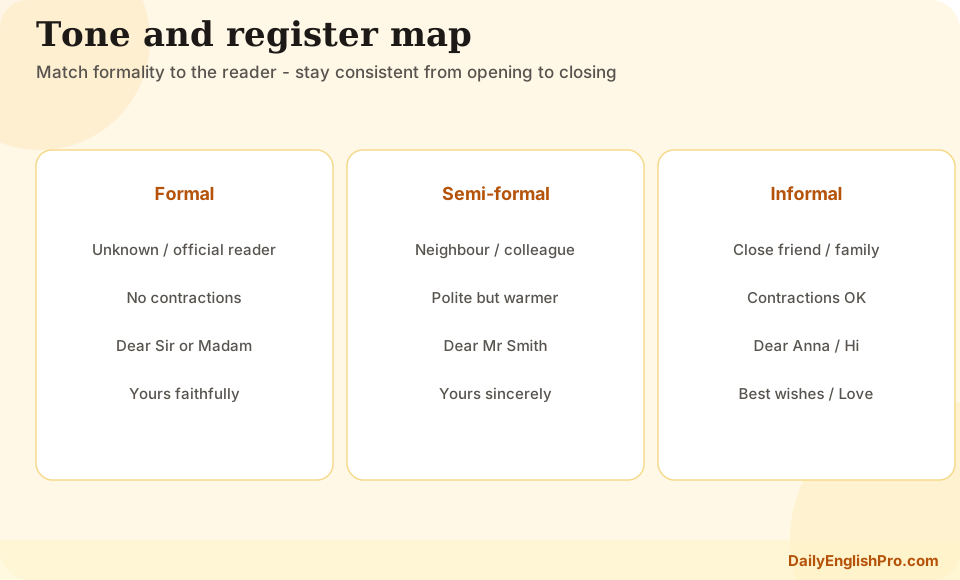
Formal, semi-formal and informal at a glance
Formal letters go to organisations or people you do not know personally: store managers, councils, hiring managers, bank staff. Semi-formal letters often go to someone you know in a role, such as a landlord, tutor or neighbour you meet politely. Informal letters go to friends and close family.
Purpose alone does not fix tone. You can apologise formally to a manager and informally to a friend. Invitation, advice and enquiry letters also shift with the reader. Choose the register from relationship first, then adjust politeness to the seriousness of the situation.
| Register | Typical reader | Greeting | Closing |
|---|---|---|---|
| Formal (name unknown) | Company, council, unknown staff | Dear Sir or Madam | Yours faithfully |
| Formal (name known) | Mr Chen, Ms Patel, hiring manager by name | Dear Mr Chen / Dear Ms Patel | Yours sincerely |
| Semi-formal | Landlord, tutor, colleague you respect | Dear Mr Lewis / Dear Anna | Kind regards / Best regards |
| Informal | Friend or close relative | Dear Maya / Hi Tom | Best wishes / See you soon |
Manager
Formal request
I would be grateful if you could arrange a replacement within ten working days.
- •No contraction
- •Polite modal
- •Specific action
Friend
Informal request
Could you bring the notes when you come over on Saturday?
- •Natural question
- •Warm detail
- •Still clear
Openings that state purpose without fluff
The first paragraph should introduce why you are writing. Formal openings often begin with I am writing to... Informal openings can greet the person and then state the purpose in the next sentence. Do not waste words on addresses, dates or subject lines; they are not required in the exam.
Keep the purpose sentence short, then let each bullet have its own paragraph. Mixing the whole story into the opening makes coverage harder to see and often leads to uneven development.
- Formal: I am writing to enquire about / request / apologise for / express interest in...
- Semi-formal: I hope you are well. I am writing to ask whether...
- Informal: It was great to hear from you. I'm writing because...
- Avoid: Since the beginning of time... or long unrelated background
Contractions, vocabulary and request strength
Contractions such as I'm, you'll and can't are natural in informal letters and sometimes acceptable in warm semi-formal notes. In strongly formal letters to unknown organisations, prefer full forms: I am, you will, cannot. Slang, emojis and text abbreviations do not belong in any GT letter.
Request strength should match seriousness. A missing parcel needs a clear remedy; a casual invite needs a friendly suggestion. Formal firmness is polite and specific, not aggressive. Threats and insults never help Task Achievement.
| Function | Formal / careful semi-formal | Informal |
|---|---|---|
| Purpose | I am writing regarding... | Just wanted to tell you that... |
| Request | I would appreciate it if you could... | Could you...? |
| Apology | Please accept my apologies for... | I'm really sorry about... |
| Closing line | I look forward to your response. | Hope to hear from you soon. |
Keep tone consistent across three bullets
A common mistake is opening formally and then sliding into casual language in the final request. Another is using Dear Sir or Madam with Love from or Best wishes alone. Greeting and closing are a pair: match them to the same register.
When you invent details for the three bullets, keep names, dates and facts consistent, and keep the voice consistent too. If the letter is formal, every bullet paragraph should sound professional. If it is informal, stay warm without becoming a chat message.
- 1Name the readerFriend, landlord, manager or unknown organisation.
- 2Pick one registerFormal, semi-formal or informal for the whole letter.
- 3Choose greeting and closingTreat them as a matched pair.
- 4Check each bulletRead requests and explanations in the same voice.
Tone checklist and practice
In the final two minutes, scan greeting, purpose line, one request sentence and the closing. Ask whether you would really speak to this person that way. Then confirm that each bullet still has enough detail.
Practise rewriting the same three bullets for a friend and for a manager. The content plan can stay similar; the register must change. That contrast builds control faster than memorising one model letter.
- Reader relationship decides register before content notes
- Greeting and closing match
- Contractions forms fit the chosen register
- No slang or chat abbreviations
- All three bullets covered with specific detail
- Request strength matches the seriousness of the situation
How do I know if a letter should be formal?+
If you do not know the person personally, or you are writing to an organisation about work, money, complaints or applications, choose formal language.
Is semi-formal safer than informal?+
When the prompt names a landlord, tutor or neighbour you know politely, semi-formal is usually safest. Save fully informal language for friends and close family.
Can I use contractions in GT Task 1?+
Yes in informal letters. In formal letters to unknown companies or officials, prefer full forms for a steadier register.
What if my tone starts formal and becomes casual?+
That inconsistency costs marks. Rewrite the casual lines so every paragraph matches the greeting and closing.
Do I need a subject line or address?+
No. Start with the greeting, state the purpose, cover the bullets, then close.