
IELTS Task 2 Problem Solution Essay Tips (2026)
Handle IELTS Task 2 problem/solution and causes/solutions essays with linked ideas, realistic remedies, clear structures, original education and transport examples, plus FAQ.
Identify the exact problem-solution variant
Problem-solution prompts are not identical. Some ask for problems and solutions. Others ask for causes and solutions. A few ask for causes and effects, or for solutions only after stating a problem in the topic sentence. Underline every task noun: problems, causes, effects, solutions. Your paragraph plan must cover each required element.
Education and transport examples help. Traffic congestion in growing cities may require causes (car dependence, weak public transport) and solutions (bus lanes, congestion charges). University dropout may require problems facing students (debt pressure, weak academic support) and solutions (targeted tutoring, flexible payment plans). Answering causes when the question asked for problems is still a Task Response error.
| Prompt type | Body 1 focus | Body 2 focus |
|---|---|---|
| Problems + solutions | Key problems | Matching solutions |
| Causes + solutions | Main causes | Solutions that target those causes |
| Causes + effects | Causes | Effects (solutions only if asked) |
| Two questions mixed | Answer Q1 fully | Answer Q2 fully |
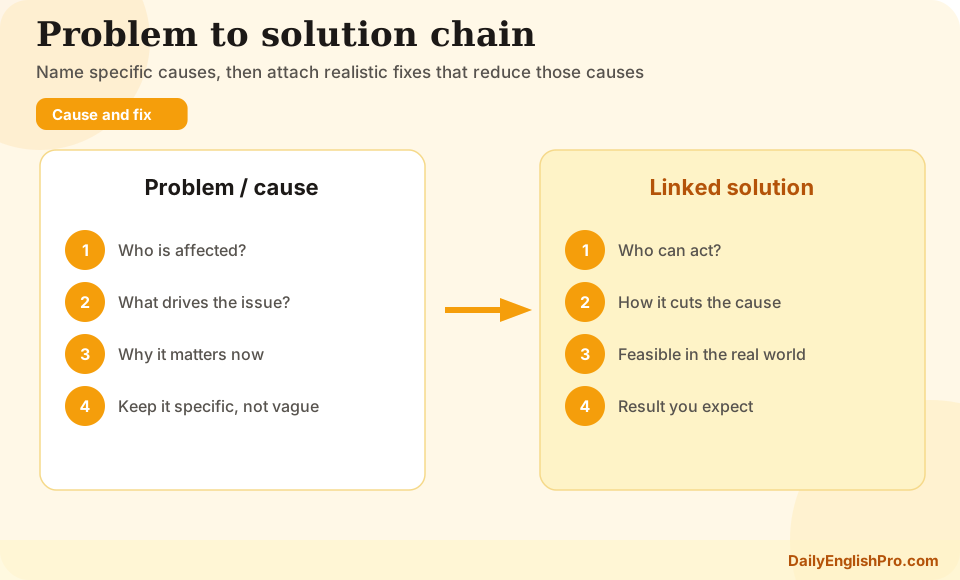
Link each solution to a stated problem or cause
Band 7 answers connect remedies to the issues already explained. If Body 1 argues that urban congestion rises because commuting by car is cheaper and more door-to-door than buses, Body 2 should not suddenly discuss school homework policy. A linked solution would improve bus frequency and priority lanes so that public transport becomes competitive on time and convenience.
State the link explicitly: To address the shortage of affordable course materials, universities could... This sentence shows the examiner that your essay is one argument, not two unrelated lists. When you have two causes, you may offer two solutions, or one broad policy that covers both, provided the connection remains clear.
Weak
Unlinked lists
Problems: pollution and stress. Solutions: plant trees and do yoga.
- •No mechanism
- •Solutions feel generic
- •Hard to see Task Response
Stronger
Linked remedy
If long car commutes drive stress, employers and cities can cut peak travel through staggered hours and reliable metro links.
- •Cause named
- •Solution targets cause
- •Realistic actors identified
Keep solutions realistic and specific
Vague solutions such as The government should improve the situation score poorly because they do not show how. Name the actor and the action: city transport authorities can reserve kerb space for buses; universities can fund evening writing workshops for first-year students; employers can subsidise season tickets. Specificity also improves Lexical Resource with natural collocations.
Avoid fantasy fixes that ignore cost or behaviour. Claiming that every citizen will stop driving tomorrow is weaker than proposing incremental incentives and better alternatives. Examiners do not require perfect policy design, but they do expect plausible connections between problem and remedy.
- 1Name the issue preciselyWrite the cause or problem in concrete terms, not as a theme label.
- 2Identify who can actGovernment, universities, employers, households or city agencies.
- 3Describe the actionState what they should do and how it reduces the issue.
- 4Add a brief resultShow the expected improvement without inventing fake statistics.
- Prefer one developed solution over three slogans
- Mention feasibility briefly when useful (cost, time, public acceptance)
- Do not turn the essay into a political speech
- Keep examples in education, transport or work contexts you can explain
Structure introductions and conclusions efficiently
The introduction should paraphrase the issue and preview that the essay will examine the required elements. You do not need a personal agree/disagree thesis unless the prompt also asks for your opinion. A clean opener for a causes/solutions transport prompt might identify rising congestion and state that the essay will analyse main causes and propose practical measures.
The conclusion should summarise the main cause or problem and the key solution in one or two sentences. Do not add a brand-new remedy at the end. If time is short, a precise conclusion is more valuable than a third undeveloped body paragraph.
| Section | Include | Avoid |
|---|---|---|
| Introduction | Issue paraphrase + essay purpose | Long background history |
| Body 1 | Causes or problems with explanation | Solutions mixed in too early |
| Body 2 | Solutions linked to Body 1 | Unrelated wish list |
| Conclusion | Restate issue + main remedy | New ideas or sudden opinions |
Sample mini-outline: workplace skills gap
Prompt idea: Many companies report that new graduates lack practical workplace skills. What are the causes of this problem, and what measures can be taken to solve it?
Body 1 causes: degree programmes prioritise theory over applied projects; internships are scarce or unpaid, so fewer students gain experience. Body 2 solutions: universities can embed assessed team projects with local firms; employers can offer short paid placements that count toward graduation. Conclusion: skill gaps shrink when study and real tasks are connected.
التمرين التالي
Frequently asked questions
Can I write more than one problem and one solution?+
Yes, but develop them. Two clear pairs are better than five undeveloped items that look like notes.
Do I need my personal opinion?+
Only if the question asks for it. Many problem-solution tasks are complete when causes/problems and solutions are answered.
What if my solution is expensive?+
That is fine if you explain why it is justified or how costs can be managed. Unrealistic free solutions are weaker than credible trade-offs.
Should solutions come before problems?+
Usually explain the issue first so the remedy has something to attach to. Follow the order implied by the question when possible.